David Dubrow

Author

  • About Dave
    • Interviews
  • Dave’s Blog
  • Dave’s Fiction
    • The Armageddon Trilogy
      • The Blessed Man and the Witch
      • The Nephilim and the False Prophet
      • The Holy Warrior and the Last Angel
    • Dreadedin Chronicles: The Nameless City
    • Get the Greek: A Chrismukkah Tale
    • Beneath the Ziggurat
    • The Ultimate Guide to Surviving a Zombie Apocalypse
  • Free Stories
    • Hold On
    • How to Fix a Broken World
    • The Armageddon Trilogy Character List and Glossary
  • Social
    • Twitter
    • Facebook
    • Google +
    • Amazon
    • Goodreads

Five Book Reviews for the Price of One

February 4, 2015 by David Dubrow Leave a Comment

These are going to be short reviews, but they’re all you’ll need to determine if the books described are worth your time and money.

  • Brilliance by Marcus Sakey: Unfortunately, this book does not at all live up to the title.
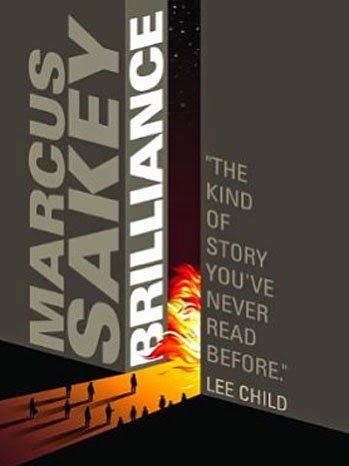
     Bestselling author Lee Child described it as, “The kind of story you’ve never read before.”  That’s not true.  This kind of story has been done before, and a lot better (Wild Cards, for example).  The premise is that in 1980, a percentage of the population was born with uncanny abilities that go right up to the edge of supernatural, but don’t quite reach it (they’re called “abnorms”).  No psychokinesis or telepathy, but one guy manipulated the stock market to make himself a multi-multi-billionaire and ended up crashing it.  Some are just super-intelligent.  The main character, Nick Cooper, has the ability to read body language in such a way as to make him an unbeatable hand-to-hand fighter.  Some abnorms have become terrorists, so Nick, under the employ of the government, goes to stop them.  It’s an impossible mission.  There are many nonsensical plot twists; a standard Hollywood divorced-but-we’re-still-great-friends relationship; a new love interest who happens to be incredibly beautiful; a my-child-is-in-danger plot element; and a 9/11-style attack that was actually carried out by the U.S. government, Truther-style.  Sakey breaks up the action sequences by telling us how Cooper makes his unnaturally-quick combat decisions, which slows the pace down and destroys the scene’s excitement.  I really wanted to like this book, but couldn’t.  Two stars out of five.

  • Fluency by Jennifer Foehner Wells: This is a first-contact science fiction novel about a group of present-day astronauts plus one incredibly-talented linguist who go to a derelict spacecraft to explore it.  The protagonist, Jane Holloway, is the linguist.  She also alternates between weepy-weak and stronger than combat-hardened military veterans.  Plagued by a past tragedy that doesn’t seem so bad, she needed a great deal of persuading from a borderline mentally defective engineer to join the space mission (as if the opportunity to meet extraterrestrial life wasn’t much of a draw).  The engineer happened to be the love interest.  Her fellow astronauts act like angry high schoolers with firearms (in one laughable scene, the captain tells the crew to put armor-piercing rounds into their handguns), the love interest is extremely incompetent at just about everything, and her supernatural ability to pick up languages faster than others can program a VCR enables her to communicate telepathically with the one surviving intelligent alien aboard the ship.  None of these characters were likable or acted in ways that made sense, the plot was a mishmash of alien politics and crew infighting, and the story seemed too much like a setup for future volumes rather than its own discrete narrative.  Two stars out of five.
  • The Wayward Pines trilogy by Blake Crouch: A sci-fi thriller that consists of Pines, Wayward, and The Last Town.  There were times when I was reading these books that I literally couldn’t put them down for love or money.  They were awesome.  Extremely well-written, accurate with weapons, complex in characterization, and exciting from start to finish.  The big secret to the town of Wayward Pines, revealed in Pines, was a bit disappointing and unbelievable, but overcame that anyway.  Wayward didn’t suffer from the middle-book slump that so many trilogies experience, and brought real tension to the overall story.  The Last Town had a disappointing ending, but it wasn’t a failure of writing.  I simply strongly disagreed with the choices the characters made at the end, though the epilogue gave it a final punch.  If you read nothing else in the thriller genre this year, at least pick up Wayward Pines.  Four out of five stars.
Facebooktwitterredditpinterestlinkedinmail

Filed Under: bad book, blake crouch, book review, brilliance, fluency, jennifer foehner wells, marcus sakey, science fiction, thriller, wayward pines

Gray Men of Horror

February 2, 2015 by David Dubrow Leave a Comment

As I buckled my preschooler into his car seat, we had a brief conversation:

Him: When Uncle J— comes back, I want him to sit next to me in the back.
Me: Well, sure, but that’s not going to be for some time.  He lives really far away, you know.
Him: Is Uncle J— yours father?
Me: No, kiddo.  My father is dead.  Uncle J— is my brother.

At this point, his eyes filled with tears.  He’s familiar with the concept of death as a practical, if not philosophical matter: we had two cats, and one of them died of heart disease some months ago, so he knows that death is a permanent state.  I didn’t feel good about telling him about my father’s death, but it’s something we’ve discussed before.  It often takes several conversations for certain concepts to sink in.  The tears he shed over his grandfather suggest that he got it this time.  This time, it made sense.

Him: Yours father died?
Me: Yes, kiddo.  He was very, very sick, and he died a few years ago, when you were a baby.
Him: *crying now*: Did I sit on his lap?
Me: Yes you did.  I have a picture of it.  He really liked you, kiddo.  It’s okay to be sad about it.

I hugged him in the car seat, wiped off his face, and he was fine by the time I fastened my own seat belt.  His resilience is an enviable thing.

Death is an aspect of human experience like any other, but too much emphasis on it is unhealthy, like an obsession with certain bodily functions.  So my little boy knows about it.  As someone who reads, watches, and writes horror, I consider it in ways that few people do as a matter of course.  After all, death is one of horror’s most central themes.

I write about death and unspeakable horrors, but you wouldn’t know it to look at me.  When I worked in the publishing industry, learning about self-defense, combat shooting, knife fighting, and similar subjects, one topic that came up from the more competent instructors was something called the Gray Man concept.  The best way to win a fight is to not be there when it happens: to be aware and avoidant.  A Gray Man doesn’t wear BDUs and an NRA Life Member T-shirt to go to the 7-11.  He carries, but he blends in.  He trains in personal defense techniques but avoids fights.  He’s unremarkable.  You just look past him.  That’s the Gray Man.

Many horror fans aren’t Gray Men (or Gray Women).  You know it to look at them.  Goths and metalheads, two subcultures that typically embrace the horror genre, select their appearances so that you know what they’re into.  I attach no judgment to this: people like what they like and do what they do and that’s just fine.  It’s reasonable to make assumptions about a Goth’s interest based on his appearance, as much as we’re told to ignore judgment based upon experience and refuse to judge a book by its cover.

What of the Gray Man of horror, then?  How much horror can one consume without it coming out in the pores?  In large part, I suspect horror fans all come to the party for different reasons.  Some of us enjoy the vicarious thrill of terrible danger.  Others groove on how justice is so often meted out to the deserving in most horror stories (or, conversely, how the bad guy sometimes wins).  And yet others really like death.

What do I like about horror?  I’m a Gray Man.  You’ll never know until I tell you.

Facebooktwitterredditpinterestlinkedinmail

Filed Under: combat shooting, culture, goths, gray man, horror, metalheads, self-defense

Movie Review: Interstellar

January 28, 2015 by David Dubrow Leave a Comment

I don’t know if I’m a Christopher Nolan fan.  I really liked The Prestige and loved Inception.  His Batman trilogy was the best effort made yet to capture Batman on film, but I was never really into Batman, and the Eastern martial arts stuff seemed sort of lame.  Still, I had high hopes going into Interstellar.

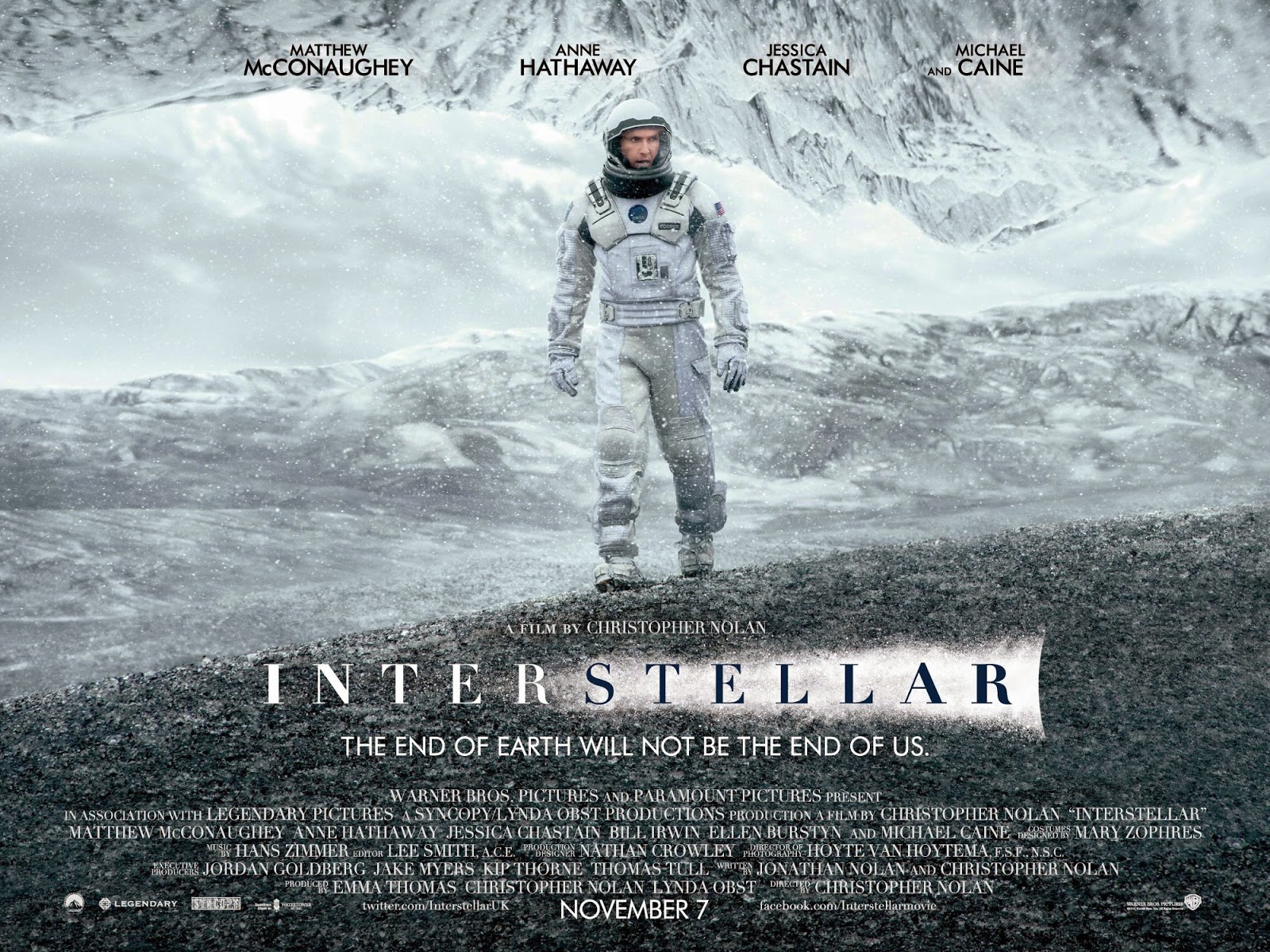
It’s his best yet.  Terrible movies come out all the time and people like them.  Mediocre ones get lots of Oscar attention, even when few people outside of the Academy have seen them.  Interstellar reminds us that truly great films can and do get made.  You can click on the IMDB link to get a description of the plot and learn who the cast is, but really, if you have the time, just see it.  I’ll describe some of the more general aspects of the film, and then afterward discuss plot elements that give the story away.
  • Matthew McConaughey: He did extraordinary work in this film.  Across the board the acting was great to middling, but in McConaughey’s case, he simply was Cooper.  At no point in the film did you get the feeling that this was a man playing a role.  You simply witnessed the remarkable experiences of a brave man doing the best he could in unbelievably difficult circumstances.  How often do you see that in a film?  Especially a genre film?
  • Family Life: It’s easy to go high-concept and get the audience’s waterworks going when it comes to family themes in a movie.  As sophisticated moviegoers, we’ve seen it all before.  This was different.  There was a level of complexity and anguish brought to this story that’s rarely seen in science fiction; the concept of time-debt was used here very well and was reminiscent of Dan Simmons’ classic Hyperion novels.  It added tension to an already taut story.
  • Immersion: There is simply no illusion a talented special effects crew can’t create with current technology.  While the effects weren’t necessary for the plot, everything looked as though it belonged: spacecraft gliding through space, the lander on the water planet, the camp on the ice world.  It was all just there.  No imagining necessary.  It looked perfectly real.  Even the robots were awesome; a lot of work was put into them to make them characters but not mascots.  
  • Our Future: Near the beginning of the film was a moment that showed you very clearly that this was not only set in the future, but that the future is a bleak, even terrible place.  You’ll know it when you see it; it’s jaw-droppingly ugly.  The Earth’s peril is both existential and philosophical, which makes McConaughey’s journey that much more important.

I don’t want to talk in hints, but if you haven’t seen this film, I would hate to spoil it for you.  Just watch it like I did, with wide eyes.  Five out of five stars.

*SPOILERY BITS*
READ NO FURTHER IF YOU HAVEN’T SEEN INTERSTELLAR
  • Matt Damon: Unfortunately for him, Matt Damon’s become such a star that he’s no longer a believable character any more, no matter who he plays (unless it’s Jason Bourne).  He did a good job, but he’s a little miscast, because he took me out of the film a little.  I knew he was squirrelly from the beginning: he talked way too much.  Also, anyone who tells you to NOT check or double-check something is a bad guy.  He had some of the best lines in the film, with his alternately pathetic apologizing and disturbing questions of the man he was trying to murder.
  • Bootstrapping: There’s a massive plot hole that the whole film is based on, and I can’t seem to get my head around it.  Everything that happens, from the wormhole appearing to Cooper saving himself via the tesseract is based on a recursive time loop.  If the future humans were the ones who sent the wormhole back in time to save us from a doomed Earth, how did those future humans survive to do it?  There should have been no future humans alive to save us.  The only way to explain it is to go into fifth-dimensional physics and play around with multiple universes, but if that’s the case, then why bother?  There’s an infinity of doomed Earth you’d have to save.
  • If B then A: It’s possible that the future humans sent the wormhole back in time not to save themselves, but to save Plan A humans.  The future humans could simply be the descendants of Plan B, who were going to survive anyway because Anne Hathaway unfroze their embryos on the new planet she’d found.  So what they did was save Earth’s population by sending the wormhole and tesseract back in time for Cooper to fly through and find.  
  • Me, Me, Me: I almost never geek out about movies, but I just dug this one.  Probably because I saw it with my brother; it was the first time we’d seen a movie in the theater together in over a decade.  He read the novelization and told me it was just a scene-by-scene novelization of the movie; no great revelations there.
Facebooktwitterredditpinterestlinkedinmail

Filed Under: christopher nolan, interstellar, movie reviews, movies, science fiction, tesseract, time debt

Movie Review: Jodorowsky’s Dune

January 26, 2015 by David Dubrow Leave a Comment

Jodorowsky’s Dune is a documentary on a failed attempt to bring Frank Herbert’s science fiction novel Dune to the silver screen in the 1970’s.  It’s a brilliant film, told in storyboards and extensive interviews.  Even if you’ve only seen David Lynch’s effort (or worse, the SyFy Channel miniseries) and not read the book(s), you really have to watch this movie.

Alejandro Jodorowsky is a Chilean filmmaker and writer, known best for his bizarre cult films El Topo, The Holy Mountain, and Santa Sangre.  He’s also hysterical to watch in this documentary: his enthusiasm for a project decades dead jumps out of the screen, as does his anger and dismay at what happened to it.  In amusing detail he described the hoops he had to jump through to cast Orson Welles as the Baron Vladimir Harkonnen and legendary artist Salvador Dali as the Emperor of the Known Universe, Shaddam IV, for example, as well as special effects wizard Dan O’Bannon and the awesomely talented artist Jean Giraud (known as Mœbius).

If Jodorowsky was brilliant, what stole the show were Mœbius’s storyboards.  Meticulously sketched, the Dune storyboard book is thicker than three Manhattan phone books stapled together.  What Jodorowsky had in mind for the visuals was incredible: it would have revolutionized cinema science fiction at least a year before Star Wars came out.  Legendary artist H.R. Giger‘s work for the visuals was also displayed, as was the art of science fiction illustrator Chris Foss.  Looking at the art for the unmade film is a terribly heartbreaking experience in imagining what could’ve been.

Nevertheless, if Jodorowsky’s vision of Dune had been made, it would have been a gigantic, artsy mess that had little to do with the original subject matter.  Fans of the book would have been horrified at what Jodorowsky had done to it (at one point in the film, Jodorowsky himself says that he would have raped the novel, like he was raping Frank Herbert himself).  At one point, he’d intended to make the movie about 12 hours long.  So it’s no wonder they weren’t able to get financial backing from the big studios: it would have been a massive money pit that everyone except the art house crowd would have loathed.

Even so, it made an awesome documentary after the fact.  Five out of five stars.

Facebooktwitterredditpinterestlinkedinmail

Filed Under: alejandro jodorowsky, documentary, dune, frank herbert, movie reviews, science fiction

Movie Review: Resurrect Dead

January 21, 2015 by David Dubrow Leave a Comment

Resurrect Dead: The Mystery of the Toynbee Tiles is a mostly fascinating documentary about some bizarre tiles set into the streets of major cities across the United States and in South America.  The tiles always say something like this, with minor variations:

TOYNBEE IDEA 
IN MOVIE 2001 
RESURRECT DEAD
ON PLANET JUPITER

Who put them there?  What do these tiles mean? Why are so many of them in Philadelphia, Pennsylvania?

The documentary does its best to answer these questions, and as much as possible, succeeds. One of the most interesting elements of the story is Justin Duerr, a primary Toynbee Tile researcher: obviously troubled, he focused a great deal of energy into finding out the truth about this mystery, and it was only during a (likely) imaginary encounter that Duerr found closure regarding it.

The mystery unfolded throughout the film, allowing the viewer to become part of the revelations in a way that made it immediate and striking.  My only criticism is that the movie went on a little too long.  Would I have tried to uncover the mystery of the Toynbee tiles differently?  Yes.  But that’s what made the movie so interesting: the researchers were real people working on a project in their own way.

Whether you’ve heard of the Toynbee tiles or not, you should definitely see this film.  4 out of 5 stars.

Facebooktwitterredditpinterestlinkedinmail

Filed Under: bizarre, city life, movie reviews, movies, surreal, toynbee tiles

Movie Review: The Possession

January 19, 2015 by David Dubrow Leave a Comment

The Possession is an excellent horror film that puts the lie to the notion that good horror can’t be rated PG-13.  The nature of the supernatural antagonist was different enough to be interesting and woven deeply enough into the film to be more than a gimmick.  Don’t be fooled by the silly “Based on a true story” thing.  A spoiler-free review follows:

  • John Winchester: Jeffrey Dean Morgan showed great range in this role, and was believable as both a college basketball coach and a terrified father trying to save his youngest daughter.  His frustration and confusion were palpable throughout.  Even though he’ll always be Sam and Dean’s dad to me, and I was hoping he’d just kick the monster’s ass the way he would in Supernatural, he showed that he could believably go beyond his beloved television role.
  • Poor Kid: Natasha Calis as Em, the dybbuk’s victim, did a great job.  Usually, let’s face it, kids in movies tend to get shrill and annoying when dealing with perilous situations, but Calis didn’t go there.  What was happening to her wasn’t fair, and you wanted that filthy, horrible thing out of her.
  • The Others: Kyra Sedgwick was her usual, irritating self in this film, which was probably deliberate on the casting director’s part.  She’s unlikable in every role she’s in, so it worked here as the ex-wife.  Matisyahu as Tzadok stole the show: he was funny without it spoiling the film’s intensity, and authoritative as a Hasidic exorcist, of sorts.  The filmmakers used him just enough.  
  • Dybbuks: The notion of a dybbuk box was very neat, and it was quite interesting to see Jewish exorcists using the power of Adonai to fight a demon, rather than the standard Catholic priest vs. Lucifer contest.  There’s a great deal of wealth to be mined in Jewish mysticism and folklore.
  • Nastiness: the rolling eye effects were particularly disturbing, as were the moths and other nasty, horrible things the dybbuk inflicted.  The MRI scene was bizarre, but worked.  Seeing the dybbuk out of the box…gross.  This was a filthy, disgusting monster that did appalling things, and it showed.
  • Caring Is Sharing: Unlike far too many horror movies made these days, effort was made to get you to care about what happened to the characters.  This wasn’t a film about bad things happening to bad people: it was about awful things happening to decent people, so the outcome mattered.  

Go see The Possession on Netflix when you have a spare 90 minutes.  4 out of 5 stars.

Facebooktwitterredditpinterestlinkedinmail

Filed Under: demons, dybbuk, horror, horror movies, judaism, movie reviews, my man matisyahu, possession

  • « Previous Page
  • 1
  • …
  • 47
  • 48
  • 49
  • 50
  • 51
  • …
  • 63
  • Next Page »

"It began to drizzle rain and he turned on the windshield wipers; they made a great clatter like two idiots clapping in church." --Flannery O'Connor, Wise Blood

"Squop chicken? I never get enough to eat when I eat squop chicken. I told you that when we sat down. You gotta give me that. I told you when we sat down, I said frankly I said this is not my idea of a meal, squop chicken. I'm a big eater." --John O'Hara, BUtterfield 8

I saw the 1977 cartoon The Hobbit as a little boy, and it kindled a love of heroic fantasy that has never left me. Orson Bean's passing is terrible news. Rest in peace.

Obviously, these young people have been poorly served by their parents, but the honest search for practical information should be lauded, not contemned.

You shouldn't look at or use Twitter, and this story is another perfect example. There's so much that's wrong here that it would take a battalion of clergy, philosophers, and psychologists to fully map it out, let alone treat the issue.

This is the advertising copy for Ilana Glazer's stand-up comedy special The Planet Is Burning: "Ilana Glazer‘s debut standup special is trés lol, and turns out - she one funny b. Check out Ilana’s thoughts on partnership, being a successful stoner adult, Nazis, Diva Cups, and more. Hold on to your nuts cuz this hour proves how useless the patriarchy is. For Christ’s sake, The Planet Is Burning, and it’s time a short, queer, hairy New York Jew screams it in your face!" This is written to make you want to watch it.

In the midst of reading books about modern farming, the 6,000 year history of bread, and ancient grains, I found this just-published piece by farmer and scholar Victor Davis Hanson: Remembering the Farming Way.

"I then confront the decreasing power of the movement in order to demonstrate the need for increased theorizations of the reflexive capacities of institutionalized power structures to sustain oppositional education social movements." Yes. Of course.

You should definitely check out Atomickristin's sci-fi story Women in Fridges.

As it turns out, there may yet be some kind of personal cost for attempting to incite a social media mob into violence against a teenage boy you don't know, but decided to hate anyway because reasons.

One of the biggest problems with internet content is that the vast majority of sites don't pay their writers, and it shows in the lack of quality writing. It's hard to find decent writers, and harder to scrape up the cash to pay them. This piece is a shining example of the problem of free content: it's worth what you pay for.

If you're interested in understanding our current cultural insanity, the best primer available is Douglas Murray's The Madness of Crowds. Thoughtful, entertaining, and incisive.

More laws are dumb. More law enforcement is dumb. The only proper response to violence is overwhelming violence. End the assault. There's a rising anti-semitism problem in New York because Jews who act like victims are being victimized by predators. None of these attacks are random. Carry a weapon and practice deploying it under duress. Be alert and aware. I don't understand why the women Tiffany Harris attacked didn't flatten her face into the pavement, but once word gets around that the consequences of violence are grave, the violence will lessen.

When are you assholes going to understand that this stupidity doesn't work any longer? Nobody gives much of a damn if you think we're sexist because we don't want to see a movie you think we should see. It only makes us dislike you that much more, and you started out being an unlikable asshole. Find a new way to shame normal people.

The movie Terms of Endearment still holds up more than 35 years later, and if you're looking for a tearjerker, this is your jam. One element that didn't get a lot of mention is, at the end, when Flap, with a shrug, decides that his mother-in-law will become the mother of his children once Emma dies. He abandons them, and nothing is made of it. This always troubled me.

You need to read this story the next time you feel the urge to complain. And if you need a shot of admiration for another family's courage, check this out.

Progressive political activist and children's author J.K. Rowling finds herself on the wrong side of a mob she helped to create. The Woke Sandwich she's been trying to force-feed others since she earned enough f-you money doesn't taste as good as it looks when she's obliged to take a bite.

I need you to check out The Kohen Chronicles and pray for this family. Their 5-year-old son has cancer.

Currently, the movie Star Wars: The Rise of Skywalker stands at 55% at Rotten Tomatoes. Don't forget that these are the same reviewers who not only adored the absolutely execrable The Last Jedi, but insisted that you were a MAGA hat-wearing incel white supremacist manbaby for not loving The Last Jedi. So either The Rise of Skywalker is an objectively bad film, or it simply wasn't woke enough to earn plaudits from our movie-reviewing moral and intellectual betters.

It's easy to hate the older pop bands like Genesis for their popularity, but they were capable of genius, and it shows in No Son of Mine.

If you want to know which identity group has more clout, read this story of the Zola ads on the Hallmark Channel.

Rest in peace, René Auberjonois. I remember you from Benson as a kid. As an adult, I remember you as Janos Audron in the Legacy of Kain video game series. You made every role you were in a classic.

Elf on a Shelf Follies, Part 2:
8-year-old: I wrote the elf a note! I hope he writes back.
Me: What did you write?
8yo: I asked if he has any friends.
Me: What if he says it's none of your business?
8yo: *eyes grow dark and glittering* Then I'll...touch him.
Me: Ah. Mutually assured destruction, then.

Elf on a Shelf Follies, Part 1: My 8-year-old got an Elf on the Shelf the other day. The book it came with tells a story in doggerel about this elf's purpose, which is to spy on the kid and report his doings to Santa Claus, who would then determine if the kid is worthy for Christmas presents this year. The book also said for the kid not to touch him, or the magic would fade, and for the family to give the elf a name. I wanted to name him Stasi. I was outvoted.

Actor Billy Dee Williams calls himself a man or a woman, depending on whim; his character Lando Calrissian is "pansexual," and his writer implies that he'd become intimate with anyone or anything, including, one presumes, a dog, a toaster, or a baby. J.J. Abrams is very concerned about LGBTQ representation in the Star Wars universe. This is Hollywood. This is Star Wars. This is what's important to the people in charge of your cinematic entertainment. Are you not entertained?

The funniest thing on the internet today is the number of people angry over an exercise bike commercial. Public outrage is always funny. Always.

One of the biggest mistakes the United States has ever made since WWII was recruiting for clandestine and federal law enforcement organizations at Ivy League schools. The best talent pools were/are available from local law enforcement and military veterans, with their maturity and, most importantly, field experience. We've been reaping the costs of these terrible decisions for decades, culminating in a hopelessly politicized, sub-competent FBI and CIA.

Watching Fauda seasons 1 and 2 again in preparation for season 3 to be broadcast, one hopes, in early 2020. Here's my back-of-the-matchbook review of season 2.

Every day I try to be grateful for what I have, even in the face of the petty frustrations and troubles that pockmark a day spent outside of one's living room, binge-watching Netflix. We live lives of ease in 21st century America, making it enormously difficult to do anything but take one's countless blessings for granted. Holidays like the just-passed Thanksgiving are helpful reminders. There's a reason why people call the attitude of a thankful heart practicing gratitude, not just feeling grateful. You have to practice it. You have to remind yourself of what you have. It's the work of a lifetime.

Held Back: A Recent Conversation.
8-year-old: Oh, and Jamie was there, too. He was in my first grade class two years ago.
Me: Wasn't he held back a year?
8yo: Yeah. It's because he kept going to the bathroom with the door open.
Me: No way!
8yo: And girls saw.
Me: That's not right. They're not going to hold a kid back a whole year over that.
8yo: Well, that's what he told me.
Me: Sounds fishy.
8yo: I believe him.
~fin~

It's right and good to push a raft of politically correct social justice policies on everything else under the sun, but when social justice invades Hollywood, that's just a bridge too far, says Terry Gilliam. Sorry, Terry: you helped make this sandwich. EAT IT.

Rob Henderson's piece on luxury beliefs will have you nodding your head over and over again...unless you subscribe to these luxury beliefs, in which case you'll get mad.

I've made the Saturday bread from Flour Water Salt Yeast so often that I've memorized the recipe. It never disappoints. Never. The same recipe works well for pizza, too.

Liberty doesn't mean the freedom to do anything you want. The true definition of liberty is the ability to choose the good. Anything less is libertinism.

Archives

My Social Media Links

  • Twitter
  • Facebook
  • Google +

Author Links

  • Amazon Author Page
  • Goodreads

Copyright © 2026 · Author Pro Theme on Genesis Framework · WordPress · Log in