David Dubrow

Author

  • About Dave
    • Interviews
  • Dave’s Blog
  • Dave’s Fiction
    • The Armageddon Trilogy
      • The Blessed Man and the Witch
      • The Nephilim and the False Prophet
      • The Holy Warrior and the Last Angel
    • Dreadedin Chronicles: The Nameless City
    • Get the Greek: A Chrismukkah Tale
    • Beneath the Ziggurat
    • The Ultimate Guide to Surviving a Zombie Apocalypse
  • Free Stories
    • Hold On
    • How to Fix a Broken World
    • The Armageddon Trilogy Character List and Glossary
  • Social
    • Twitter
    • Facebook
    • Google +
    • Amazon
    • Goodreads

Mansplaining Problem Solved

June 15, 2015 by David Dubrow Leave a Comment

A lot of people thought that the If Jane Austen Got Feedback from Some Guy in a Writing Workshop piece was just the balls*.  It’s been linked, relinked, commented upon, and generally well-loved.

The comments on the piece were where it lived for me.  Notably, there was some outrage over the inherent “mansplaining” in the piece.  Yes, it was satire, but when readers take it seriously enough to express negative feelings about it, it’s not just a knock-knock joke.  It deserves a little analysis.

If you use the term “mansplaining” unironically, you will not enjoy the remainder of this post.
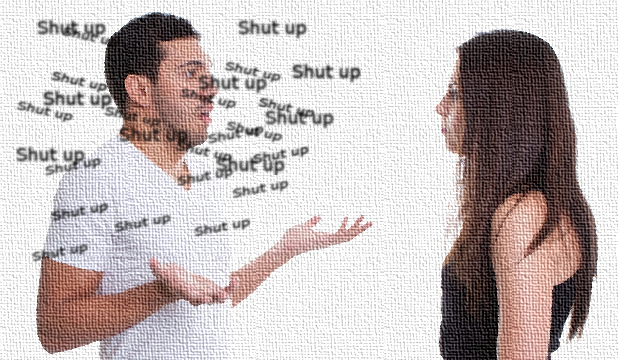
To avoid the mansplaining problem, the solution is to simply segregate your choice of interlocutors so that you, as a confident woman, won’t have to listen to the mansplaining.  Whenever presenting a piece for feedback, simply say, “Men need not apply.”  It’s okay to do that.  No men, no mansplaining.  (You can change the term “Men” here to “Guys” or, if you’re so inclined, “Dudebros” to really make an impact.)  If the 21st century has taught us anything, it’s that it isn’t the value of the information presented that matters, but the gender, race, age, and political viewpoint of the presenter.  Choose who you communicate with wisely, and speak your truth as bravely as you can manage.

Failing that, there are publishers who will cater to you.  It’s all good.

What follows will be some offensive mansplaining about related issues.  This is your trigger warning.
My years of employment in the publishing industry have taught me something that should be self-evident to anyone who has worked in or run a business, but is not because the truth is ugly and shitty and hurtful: businesses exist to make money.  This is especially true for publishers.  The vast, vast, vast majority of them care about how much money they can make from publishing your book, and that’s it.  Very little else matters.  Including your gender.  And your color.  And your sexual orientation.  These qualities are only important insofar as they affect marketing.  If publishers aren’t publishing your books, it’s because they don’t think they can sell your books.

Isn’t the demand for a carve-out to cater to your particular needs an admission that you can’t succeed any other way?  Do you really want any success you might achieve to be directly attributed to some kind of affirmative action for writers?  Don’t you want to compete?

Extra bonus content about writing workshops:
I did writing workshops as an undergrad decades ago, and I won’t do them again.  The best way to get better at something isn’t to submit your work to a committee, but to do it over and over again until you’ve done it right.  That doesn’t mean you should publish every piece of deathless prose you ever write: it means that you need to do a lot of reading and writing and critiquing and self-critiquing before you achieve competence as a writer.  That’s just the beginning: do you really want to be just competent?  You really do have to read.  A lot.  And you have to do it with both eyes open and find out what you like about what you’ve read and figure out why you liked it and examine it to determine why it worked so well and how you can do it yourself in your own way.  Over and over and over again.  Some of it’s unconscious, some of it isn’t.  Cultivate mindfulness in reading.  Then do the same for writing.  Easy-peasy.  Anyone can do it, right?

*“The balls” is a dudebro (that is, male) term for something that is impressive.  As in, “Yo, that patriarchal way you mansplained your position to that chick who asked you a question was the balls!”


Facebooktwitterredditpinterestlinkedinmail

Filed Under: feminism, gender gap, mansplaining, men and women, publishing

Zombie Redoubts on the Go

June 10, 2015 by David Dubrow Leave a Comment

The first book I wrote was The Ultimate Guide to Surviving a Zombie Apocalypse.  I wrote it under the pseudonym F. Kim O’Neill, because I thought that survival skills and zombie-killing techniques would be more credible if they came from a fictional military veteran than a real-life goofball like myself.  Despite my past and present goofball status, my book is still the most realistic primer available on surviving a Zombie Apocalypse, bar none.

Since the book was published in December 2010, I’ve written some shorter pieces on zombie apocalypse survival skills.  What follows is a rewrite of an earlier piece.

Zombie Redoubts on the Go

In The Ultimate Guide to Surviving a Zombie Apocalypse, I described methods to turn your house or apartment into a Zombie Redoubt: a place of refuge that can be readily defended during a Zombie Apocalypse.  If, for whatever reason, you can’t or won’t take those steps to make your home more zombie-resistant (almost no place on Earth is completely zombie-proof), then you will want to read on.  Even if you have stocked up your Zombie Redoubt with weapons, supplies, and water, the longer you stay in one place, the more likely it is that you’ll meet wandering, hungry undead.  Every fight can be your last, be it from bad luck, a jammed gun, or an overwhelming number of enemies.  Eventually you’re going to have to move out of your Zombie Redoubt and find a new place to live.

Whether you’re looking for a place to sleep for the night or a home for a few weeks, identifying a suitable  Zombie Redoubt on the go should include the following factors:

  • That Prius May Save the Environment, but It Won’t Save Your Life: If you use an abandoned car as a temporary hotel and are surprised by zombies, you’re in a very bad position.  Inside an automobile there’s little room to dodge attacks or access a weapon (let alone swing one), and the entire top half of the thing is made out of glass that a determined undead attacker will eventually break.  You’re also very easily surrounded in a car, and it can be extremely difficult to get out of one in a hurry.  
  • More Than One Exit: Any place you go into should have at least two means of egress: the one you entered and one other that leads to a ground floor exit.  If you’re running from zombies and lock yourself into a structure that only has one exit, you’re just delaying the inevitable. Sooner or later you’re going to have to get out and deal with the problem that brought you there in the first place.  Of course, you can’t always immediately tell if the building you plan to hole up in has a second way out, so before you commit to staying for any length of time, do a thorough sweep of the first floor and test any exits you might see: that back fire door may be locked or rusted shut.  
  • The Visible Man: Places like libraries, schools, supermarkets, convenience stores, and other retail establishments may have things like free food, water, and books, but they also have very large windows and glass fronts.  This glass may be zombie-proof, but it also provides both living and undead enemies with an unobstructed view of the interior of the building.  If zombies see you in there, they will never leave.  Sure, you can try to block all the windows, but with what?  Will it block all light?  Did you leave yourself enough peepholes to see what’s going on outside?  Use these kinds of places as resupply stops and very temporary shelters, not homes.
  • Knock Knock, Who’s There: Depending on the size of the structure you’ve entered, you will want to make certain that you’re alone in it.  If it’s an office building, secure all ground floor methods of entry or egress to keep upstairs tenants from sneaking up on you.  Just because the building doesn’t have power, it doesn’t mean you can’t be surprised by undead in the elevator shaft, for example.  If it’s a house or smaller structure, go room to room on a search for enemies before relaxing.  During the Zombie Apocalypse most surprises you’ll experience will turn out to be nasty ones, not birthday parties. Minimize the chances of being surprised.
  • Squatter’s Rights: Be prepared to face down other scavenging humans in your quest for shelter, but unless your intent is to kill everyone you see, you may want to avoid places that show obvious signs of habitation.  If you’ve managed to survive the first few weeks of the Zombie Apocalypse, you’re a tougher customer than you used to be.  The problem is, so is everyone else.  You don’t know what that scruffy-looking guy and his wall-eyed girlfriend in the abandoned 7-11 had to go through to survive.  With thousands of hungry undead seeking your brains, do you really want to fight everybody?  There’s probably a suitable place to crash down the street.

Practice assessing places as Zombie Redoubts on the go before the Zombie Apocalypse. Take a casual look around the next time you’re in an unfamiliar building.  Identify the exits, check out how much glass is out front, and give it a general look-see.  Imagine yourself having to sleep there with minimal creature comforts.  You’ll be surprised at what you discover.

Illustration by Carlos Machuca for The Ultimate Guide to Surviving a Zombie Apocalypse.
Facebooktwitterredditpinterestlinkedinmail

Filed Under: f kim o'neill, horror, redoubt, survival, the ultimate guide to surviving a zombie apocalypse, zombie apocalypse, zombies

New Review of The Blessed Man and the Witch

June 1, 2015 by David Dubrow Leave a Comment

Nev Murray at his Confessions of a Reviewer!! reviewed my first novel The Blessed Man and the Witch:

“You know those little men you see walking around with the placards around their necks declaring “The end is nigh”? Maybe we should speak to them and find out when because this book makes it sound like it is entirely possible, and just around the corner.”

It’s a lengthy, detailed analysis from an experienced well-read book reviewer who’s not afraid to tell it like it is.  Did he like it?  Click to find out!
Facebooktwitterredditpinterestlinkedinmail

Filed Under: blessed man and the witch, book review, horror

Charlie Charlie

May 27, 2015 by David Dubrow Leave a Comment

First we had séances, and they were pretty neat.

Then we had Ouija boards, and they were pretty neat, too.
Now we have Charlie Charlie:
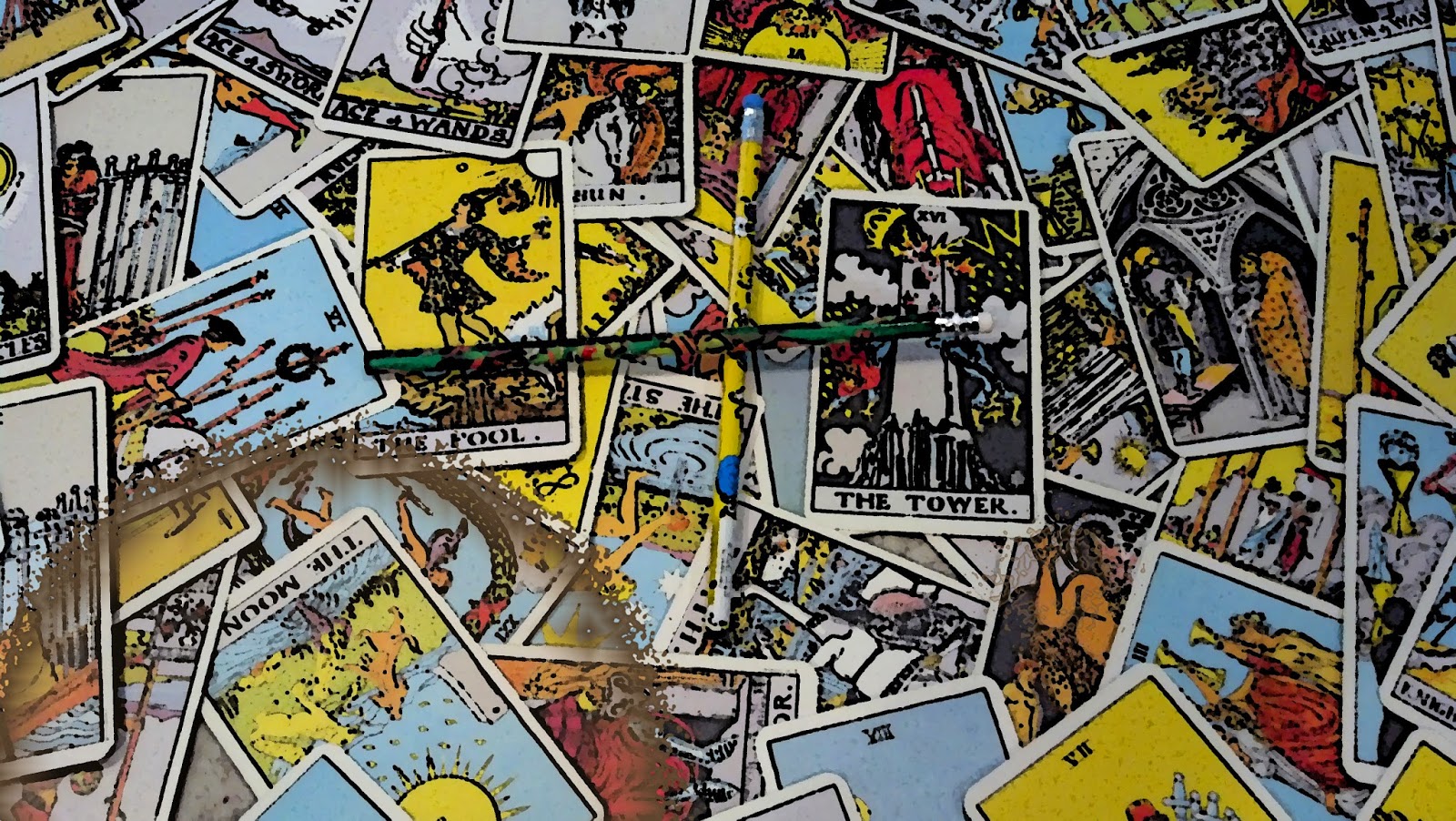
Here’s how it works: Take a piece of paper and draw a single horizontal line and a single vertical line that meet in the center. Put a “YES” in two opposing sections and a “NO” in the other two. Place two pencils across the middle of the drawing in a plus-sign formation, with one balanced atop the other so that it can spin.

Ask aloud, “Charlie, Charlie, are you there?” or “Charlie, Charlie, can we play?” and the top pencil will likely move at some point because of how it’s balanced. However, some players believe it’s a sign that “Charlie” is in the room and ready to take questions.

According to the BBC, Charlie Charlie’s origins are murky, but it’s clear they have nothing to do with Mexico.
It’s an occult ritual like many others: you gather up your materials (pencils, paper), you draw a figure with words on it, you attempt to contact forces beyond the physical, and you complete the ritual with a valediction.  In fact, you actually have to ask the spirit you’re summoning if you can end the ritual, and say good-bye when you’re done.
So if the people engaging in the Charlie Charlie Challenge take it seriously, they believe, if only for a few moments, that the laying of one pencil upon another can, under certain circumstances, enable one to communicate with a demon or other potentially malevolent spirit.

Instead of gravity and air currents moving the pencil, it’s the spirit world.

At least with a Ouija board, you need equipment like a board and planchette.  A séance requires a group willing to hold hands and, typically, a crystal ball.  Charlie Charlie is the most dumbed-down form of divination I’ve ever seen.

Facebooktwitterredditpinterestlinkedinmail

Filed Under: charlie charlie, dumb trends, occult, social media

Mad Men Series Finale: Thoughts

May 19, 2015 by David Dubrow Leave a Comment

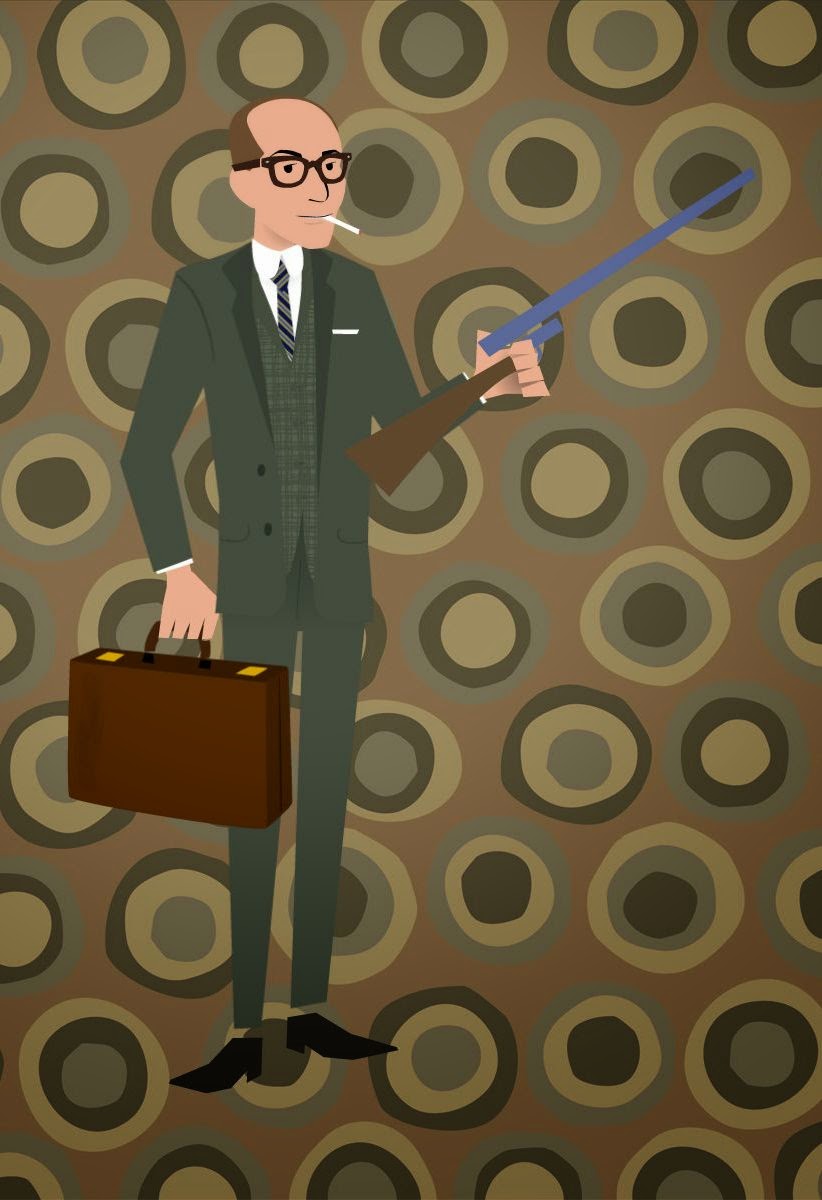
I started watching Mad Men because I wanted to see the aesthetic I remembered fondly from such TV shows as Bewitched and The Dick Van Dyke Show.  Who could forget Larry Tate’s mustache (not to mention Doctor Bombay’s)?  Or Dick tripping over the hassock?  Mad Men through a haze of UHF nostalgia.  I was born too late to watch these programs live, but their syndication colored my childhood.

Mad Men was a great show, but not a great great show, like The Prisoner or the first few seasons of Lost.  It was a little too self-conscious, a little pretentious in its attempt to be art.  Occasionally it dipped too deeply into absurdity, like when the English guy got his foot eaten up by the riding mower or the fistfight between Pete Campbell and Lane Pryce.  And, of course, it had to insert itself into 2010-era presidential politics with an unnecessary dig at Mitt Romney’s father, which took you out of the show and reminded you who was making it.  But it held my interest over seven seasons with excellent performances and some genuinely good writing.

I don’t have strong feelings either way about the finale.  It could have been any other episode, which makes sense: it’s its own fully realized world, and will continue to turn when we’ve stopped watching it.  Don may have made the Coke advert at the end, or he may not have.  With evidence for both, the question becomes an exercise in mental masturbation.  The inevitable comparisons to the ambiguous finale of The Sopranos are tedious insofar as that show’s long gone, too, and we’ll never know.

As the finale lacked any semblance of a plot or organizing theme, I’ll take it character by character.

  • Don: A somewhat expected series of events: he goes to the hippie retreat and contemns it as expected, but later experiences an epiphany that opens him up to what it has to offer.  His last phone call with Betty was brutal and ugly, leavened only by the “Birdy” at the end.  Don’s connection to the man at the encounter group who finds himself invisible is, by its nature, a very transitory thing.  Don is only invisible now because he’s gone, and he’s only unneeded because his dying ex-wife told him so.  Don fills up a room: you can’t ignore him.  He can’t be a nobody: he’s just too big.  Om.
  • Peggy: I wasn’t terribly entranced by the declarations of love between her and Stan because it meant that their extraordinary, charming, platonic friendship would end.  They’re both great, extremely likable characters, and it’s a shame that their dynamic will now change.  At least I won’t have to watch it disintegrate.
  • Pete: They didn’t give him much to do.  I liked the symbolism of Pete giving Peggy a cactus, and her holding it between them during their brief good-bye.  The issue of their baby is indeed a prickly matter.  Trudy Campbell will probably hate it in Kansas.  She’s also the voice of Unikitty.  
  • Betty: Dying has not changed her essentially toxic, self-absorbed nature, and I feel terrible for her kids.  It’s awful that Bobby’s close to setting the kitchen on fire in an attempt to make dinner because his sick mother won’t tell him or his father that she’s dying.  Bobby and Gene are adrift.  If there’s a villain in this season, it’s Betty.  It doesn’t reflect well on Don that he let her talk him out of going back to New York immediately.  Just an awful situation across the board, making an unlikable character even less likable.
  • Joan: A very odd, compressed relationship with the Bruce Greenwood character that needed to have been teased earlier to make sense at the end.  Her story’s conclusion lacked punch, or even interest.  Will she be successful?  Do we care?  Should we?

Nice to see that Roger’s having a good time in Paris, but he’s always having a good time, except when he isn’t.  Ken’s still missing an eye.  I wish he’d return to writing.  Harry’s still a slimeball: yay!  Megan was thought of, but not missed.  Same with Henry.

I was hoping for a last-minute return of Sal.  Didn’t happen.

Facebooktwitterredditpinterestlinkedinmail

Filed Under: don draper, mad men, nostalgia, television

God’s Not Dead: You Deserve Better

May 4, 2015 by David Dubrow Leave a Comment

We need to talk about God’s Not Dead.  It’s available on Netflix streaming.

Horror fans are a lot like Christian fiction fans: there are so many truly terrible horror movies out there that when one comes out that’s even half-good, it gets lauded by fans of the genre as a masterful piece of filmmaking and praised way beyond its quality.  Horror and Christian films are difficult genres to get right, but when they’re done properly, they can be extraordinary.

God’s Not Dead was not done properly.  It’s a terrible movie.  I can’t believe that anyone who liked it can say how great it was without including some pretty massive caveats.  You shouldn’t do that.  Don’t make excuses for bad art.  Despite how bad it is, it made, according to IMDB, a staggering $60,753,735.  That’s a lot of money for such a bad film.

I understand that the film’s intent is not to convert the non-believer, but to preach to the converted.  That’s perfectly fine.  As a Jew, I’m not the intended audience.  Nevertheless, I came in wanting to like the movie, not to poke holes in it or express derision for its explicitly religious themes.  I like Christian fiction, even though I belong to a different faith.

The most glaring problem with the movie was its utter lack of subtlety in every aspect.  None of the characters had any depth to speak of, and none of the situations portrayed were at all believable.  Our willing suspension of disbelief works for horror movies and superhero flicks because we go to the theater expecting unbelievable things.  God’s Not Dead isn’t a science fiction movie: it’s a film about Christian apologetics, and requires a certain amount of realism to successfully carry its theme.  The film was entirely unrealistic because almost every single character in it was a caricature, not an actual person.  This is extremely problematic in a character-driven story like God’s Not Dead.

Radisson, the antagonist, was awful in every particular you can imagine: he belittles his girlfriend in public and in private, insults anyone who disagrees with him, and even threatens the protagonist Josh with flunking out of school.  He’s not just an atheist, but an anti-theist.  He literally hates God.  Why?  Because his religious mother died of cancer when Radisson was twelve.  It’s a popular belief that under the skin of every atheist is a living, breathing Christian once tragically disappointed by the apparent capriciousness of God. But there’s no difference between that belief and the thinking that people who dislike homosexual behavior do so because they are themselves gay and fight against their hated urges through gay-bashing.  Neither of these beliefs is accurate.  They’re childish.  Some people just don’t believe in God.  Radisson’s deathbed conversion (well, deathstreet conversion) was not just unsubtle, but insulting.  None of Josh’s arguments were persuasive enough to plant even the smallest seed of doubt in Radisson’s mind.  It simply took the fear of an eternity in Hell to get him to accept Jesus Christ. Doesn’t that undercut the entire intellectual basis for becoming a Christian?  The screenwriters had the nerve to use this quote from C.S. Lewis: “Only a real risk tests the reality of a belief,” but entirely forgot Lewis’s own conversion to Christianity: “When we set out I did not believe that Jesus is the Son of God and when we reached the zoo I did.”  Sometimes, even a lot of times, that’s what it takes: careful consideration over time.  Subtle changes leading to acceptance.  It shouldn’t take hitting people with cars to get them to see your point of view.

Amy Ryan’s story was a carbon copy of Radisson’s in theme if not circumstance.  She begins as a ludicrous caricature of a leftist journalist, asking questions no real reporter ever asks (even on MSNBC), and finally begins to see the light of Christ when she’s diagnosed with terminal cancer. We can only sympathize with her because she’s going to die of cancer, not because she’s nice or displays admirable qualities of any kind.  Also, the Duck Dynasty stars’ cameos were, let’s face it, included to add dubious (and now waning) star power, not because they added value to the plot or characterization.  Christian apologetics, as a philosophy, is deeper than the “no atheists in foxholes” argument, but we get little else in its practical application in Amy and Radisson’s stories.

Marc the businessman was laughably evil: he broke up with Amy because she had cancer, and was later called the Devil by his own ailing mother.  Josh’s girlfriend Kara was the typical unsupportive, controlling female Josh had to get rid of to complete his task (the actress’s performance of her was horribly wooden).  Ayisha the Muslim got thrown out of the house because she just couldn’t conceal her love of Jesus from her mute younger brother, but without buildup or conclusion, her story seemed out of place, unfinished.  Reverend Dave’s story was kind of nice, if clumsily written.

For the most part, the performances were fine.  Kevin Sorbo was the stand-out, obviously relishing his role as antagonist.  Shane Harper did okay, though his face could only make three expressions throughout the film.  They didn’t give Dean Cain very much to do.  I’d last seen David A.R. White in Six: The Mark Unleashed, so it was nice to see him in this role.  Benjamin Oyango had the best lines, and did the best with them (the accent helped).

Obviously, if all you want to do is reinforce faith, then you don’t have to work as hard as you would to convert a non-believer.  But don’t you deserve better than this ham-handed effort?  It could more easily have been made into a blog post pointing to great Christian philosophers like Blaise Pascal, C.S. Lewis, and William Lane Craig.  Heck, Dinesh D’Souza made a documentary called America.  Why not a well-produced documentary on Christian apologetics?  You don’t need Duck Dynasty for that.

If you saw it and liked it, great.  You deserve better, though.  You deserve something with depth.  Don’t subsidize bad movies because there’s nothing else out there.  Demand quality.

Facebooktwitterredditpinterestlinkedinmail

Filed Under: bad movie, christian apologetics, christianity, god's not dead, movie review, religion

  • « Previous Page
  • 1
  • …
  • 43
  • 44
  • 45
  • 46
  • 47
  • …
  • 63
  • Next Page »

"It began to drizzle rain and he turned on the windshield wipers; they made a great clatter like two idiots clapping in church." --Flannery O'Connor, Wise Blood

"Squop chicken? I never get enough to eat when I eat squop chicken. I told you that when we sat down. You gotta give me that. I told you when we sat down, I said frankly I said this is not my idea of a meal, squop chicken. I'm a big eater." --John O'Hara, BUtterfield 8

I saw the 1977 cartoon The Hobbit as a little boy, and it kindled a love of heroic fantasy that has never left me. Orson Bean's passing is terrible news. Rest in peace.

Obviously, these young people have been poorly served by their parents, but the honest search for practical information should be lauded, not contemned.

You shouldn't look at or use Twitter, and this story is another perfect example. There's so much that's wrong here that it would take a battalion of clergy, philosophers, and psychologists to fully map it out, let alone treat the issue.

This is the advertising copy for Ilana Glazer's stand-up comedy special The Planet Is Burning: "Ilana Glazer‘s debut standup special is trés lol, and turns out - she one funny b. Check out Ilana’s thoughts on partnership, being a successful stoner adult, Nazis, Diva Cups, and more. Hold on to your nuts cuz this hour proves how useless the patriarchy is. For Christ’s sake, The Planet Is Burning, and it’s time a short, queer, hairy New York Jew screams it in your face!" This is written to make you want to watch it.

In the midst of reading books about modern farming, the 6,000 year history of bread, and ancient grains, I found this just-published piece by farmer and scholar Victor Davis Hanson: Remembering the Farming Way.

"I then confront the decreasing power of the movement in order to demonstrate the need for increased theorizations of the reflexive capacities of institutionalized power structures to sustain oppositional education social movements." Yes. Of course.

You should definitely check out Atomickristin's sci-fi story Women in Fridges.

As it turns out, there may yet be some kind of personal cost for attempting to incite a social media mob into violence against a teenage boy you don't know, but decided to hate anyway because reasons.

One of the biggest problems with internet content is that the vast majority of sites don't pay their writers, and it shows in the lack of quality writing. It's hard to find decent writers, and harder to scrape up the cash to pay them. This piece is a shining example of the problem of free content: it's worth what you pay for.

If you're interested in understanding our current cultural insanity, the best primer available is Douglas Murray's The Madness of Crowds. Thoughtful, entertaining, and incisive.

More laws are dumb. More law enforcement is dumb. The only proper response to violence is overwhelming violence. End the assault. There's a rising anti-semitism problem in New York because Jews who act like victims are being victimized by predators. None of these attacks are random. Carry a weapon and practice deploying it under duress. Be alert and aware. I don't understand why the women Tiffany Harris attacked didn't flatten her face into the pavement, but once word gets around that the consequences of violence are grave, the violence will lessen.

When are you assholes going to understand that this stupidity doesn't work any longer? Nobody gives much of a damn if you think we're sexist because we don't want to see a movie you think we should see. It only makes us dislike you that much more, and you started out being an unlikable asshole. Find a new way to shame normal people.

The movie Terms of Endearment still holds up more than 35 years later, and if you're looking for a tearjerker, this is your jam. One element that didn't get a lot of mention is, at the end, when Flap, with a shrug, decides that his mother-in-law will become the mother of his children once Emma dies. He abandons them, and nothing is made of it. This always troubled me.

You need to read this story the next time you feel the urge to complain. And if you need a shot of admiration for another family's courage, check this out.

Progressive political activist and children's author J.K. Rowling finds herself on the wrong side of a mob she helped to create. The Woke Sandwich she's been trying to force-feed others since she earned enough f-you money doesn't taste as good as it looks when she's obliged to take a bite.

I need you to check out The Kohen Chronicles and pray for this family. Their 5-year-old son has cancer.

Currently, the movie Star Wars: The Rise of Skywalker stands at 55% at Rotten Tomatoes. Don't forget that these are the same reviewers who not only adored the absolutely execrable The Last Jedi, but insisted that you were a MAGA hat-wearing incel white supremacist manbaby for not loving The Last Jedi. So either The Rise of Skywalker is an objectively bad film, or it simply wasn't woke enough to earn plaudits from our movie-reviewing moral and intellectual betters.

It's easy to hate the older pop bands like Genesis for their popularity, but they were capable of genius, and it shows in No Son of Mine.

If you want to know which identity group has more clout, read this story of the Zola ads on the Hallmark Channel.

Rest in peace, René Auberjonois. I remember you from Benson as a kid. As an adult, I remember you as Janos Audron in the Legacy of Kain video game series. You made every role you were in a classic.

Elf on a Shelf Follies, Part 2:
8-year-old: I wrote the elf a note! I hope he writes back.
Me: What did you write?
8yo: I asked if he has any friends.
Me: What if he says it's none of your business?
8yo: *eyes grow dark and glittering* Then I'll...touch him.
Me: Ah. Mutually assured destruction, then.

Elf on a Shelf Follies, Part 1: My 8-year-old got an Elf on the Shelf the other day. The book it came with tells a story in doggerel about this elf's purpose, which is to spy on the kid and report his doings to Santa Claus, who would then determine if the kid is worthy for Christmas presents this year. The book also said for the kid not to touch him, or the magic would fade, and for the family to give the elf a name. I wanted to name him Stasi. I was outvoted.

Actor Billy Dee Williams calls himself a man or a woman, depending on whim; his character Lando Calrissian is "pansexual," and his writer implies that he'd become intimate with anyone or anything, including, one presumes, a dog, a toaster, or a baby. J.J. Abrams is very concerned about LGBTQ representation in the Star Wars universe. This is Hollywood. This is Star Wars. This is what's important to the people in charge of your cinematic entertainment. Are you not entertained?

The funniest thing on the internet today is the number of people angry over an exercise bike commercial. Public outrage is always funny. Always.

One of the biggest mistakes the United States has ever made since WWII was recruiting for clandestine and federal law enforcement organizations at Ivy League schools. The best talent pools were/are available from local law enforcement and military veterans, with their maturity and, most importantly, field experience. We've been reaping the costs of these terrible decisions for decades, culminating in a hopelessly politicized, sub-competent FBI and CIA.

Watching Fauda seasons 1 and 2 again in preparation for season 3 to be broadcast, one hopes, in early 2020. Here's my back-of-the-matchbook review of season 2.

Every day I try to be grateful for what I have, even in the face of the petty frustrations and troubles that pockmark a day spent outside of one's living room, binge-watching Netflix. We live lives of ease in 21st century America, making it enormously difficult to do anything but take one's countless blessings for granted. Holidays like the just-passed Thanksgiving are helpful reminders. There's a reason why people call the attitude of a thankful heart practicing gratitude, not just feeling grateful. You have to practice it. You have to remind yourself of what you have. It's the work of a lifetime.

Held Back: A Recent Conversation.
8-year-old: Oh, and Jamie was there, too. He was in my first grade class two years ago.
Me: Wasn't he held back a year?
8yo: Yeah. It's because he kept going to the bathroom with the door open.
Me: No way!
8yo: And girls saw.
Me: That's not right. They're not going to hold a kid back a whole year over that.
8yo: Well, that's what he told me.
Me: Sounds fishy.
8yo: I believe him.
~fin~

It's right and good to push a raft of politically correct social justice policies on everything else under the sun, but when social justice invades Hollywood, that's just a bridge too far, says Terry Gilliam. Sorry, Terry: you helped make this sandwich. EAT IT.

Rob Henderson's piece on luxury beliefs will have you nodding your head over and over again...unless you subscribe to these luxury beliefs, in which case you'll get mad.

I've made the Saturday bread from Flour Water Salt Yeast so often that I've memorized the recipe. It never disappoints. Never. The same recipe works well for pizza, too.

Liberty doesn't mean the freedom to do anything you want. The true definition of liberty is the ability to choose the good. Anything less is libertinism.

Archives

My Social Media Links

  • Twitter
  • Facebook
  • Google +

Author Links

  • Amazon Author Page
  • Goodreads

Copyright © 2026 · Author Pro Theme on Genesis Framework · WordPress · Log in