David Dubrow

Author

  • About Dave
    • Interviews
  • Dave’s Blog
  • Dave’s Fiction
    • The Armageddon Trilogy
      • The Blessed Man and the Witch
      • The Nephilim and the False Prophet
      • The Holy Warrior and the Last Angel
    • Dreadedin Chronicles: The Nameless City
    • Get the Greek: A Chrismukkah Tale
    • Beneath the Ziggurat
    • The Ultimate Guide to Surviving a Zombie Apocalypse
  • Free Stories
    • Hold On
    • How to Fix a Broken World
    • The Armageddon Trilogy Character List and Glossary
  • Social
    • Twitter
    • Facebook
    • Google +
    • Amazon
    • Goodreads

You Deserve Better Than Star Dreck

January 19, 2017 by David Dubrow Leave a Comment

My newest piece for The Loftus Party discusses the two largest science fiction franchises still in business: Star Trek and Star Wars:

The reboot of the Star Trek movie franchise is horrible. Absolutely horrible. The reimagined characters lack the discipline, integrity, and charm of the originals. Nichelle Nichols’ Uhura was brave, beautiful, and competent in a way that made her character realistic. Zoe Saldana’s Uhura is a man in a dress who kicks alien ass and bangs Vulcans. The first reboot film was only watchable because it had Leonard Nimoy in it. The second was an appalling Truther allegory that wasted the potentially frightening character of Khan. And the third, Star Trek Beyond, was incomprehensible, with an antagonist that made no sense in anything he did, a plot that was thinner than truck stop toilet paper, and a series of unfunny joke lines that masqueraded as dialogue.

This piece will make you angry…about the truth. Click to become offended and enlightened all at once.


Facebooktwitterredditpinterestlinkedinmail

Filed Under: Uncategorized Tagged With: loftus party, science fiction, star trek, star wars

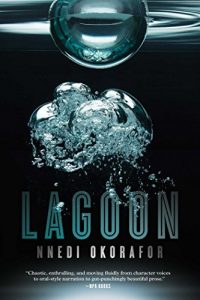
Book Review: Lagoon by Nnedi Okorafor

January 3, 2017 by David Dubrow 2 Comments

Combining a half-baked species of magical realism with high-minded science fiction, Nnedi Okorafor’s Lagoon sits in an uneasy twilight of muddled themes that don’t quite coalesce into a coherent story. In many respects the novel serves as a love letter to a fictional Lagos, Nigeria, with sentient spiders, aquatic monsters, and magically-enhanced protagonists fighting for attention in the context of awakening gods and visiting space aliens. The novel shines brightest in its depiction of life in Lagos, a place that mingles middle-class wealth with desperate poverty, but is overshadowed by the huge cast of characters that do nothing to move the minimal plot along.

Lagoon is an unusual sort of first-contact tale: an alien spacecraft appears in the ocean off the coast of Lagos, Nigeria, and three people are drawn to its arrival: Adaora, a marine biologist; Anthony, a rapper; and Agu, a soldier. Adding to the confusion of A-names, Adaora christens the alien they meet Ayodele. The rest of the novel is taken up with how the alien Ayodele interacts with people, how Ayodele intends to change the world, and how life in Lagos is altered by the event.

The antagonists are Chris, Adaora’s husband, who has recently found Christianity, and Chris’s priest, Father Oke. Father Oke follows the cliché of Christian clergy in fiction: greedy, occasionally violent, entirely without ethics. His influence on Chris is profound, turning Chris from a loving husband and father into an abusive, bull-headed monster. While Islam is also mentioned as a religious influence on Nigeria, you won’t find anything uncomplimentary said or implied of it in the novel; after all, it’s a lot safer to stigmatize Christians than Muslims.

When reading a book for review, I always avoid finding anything out about the author until after the book’s finished. My intent is to review the text, not the writer. Nnedi Okorafor is a communist, an out-and-proud Marxist, and this is made clear early on in the novel during an exchange with Chris and Father Oke:

Father Oke made the sign of the cross. This always calmed his parishioners down. Now was no exception. Chris instantly quieted and relaxed. “Trust in the Lord, Brother Chris….Go to bed. I will see you tomorrow.”

Sufficiently opiated by the words of his beloved priest, Chris felt better.

This term “opiated” brings to mind Karl Marx’s sort-of quote, “Religion is the opiate of the masses,” and Okorafor’s love of the destructive, anti-human philosophy of communism is also reflected in the words of the wise alien Ayodele, who says to the president of Nigeria, “You believe in Marxism, yet you are too powerless to enact it.” It’s the superintelligent alien’s version of the modern-day communist’s lament, “Communism works: it just hasn’t been tried properly yet.” While this isn’t a main theme of the novel, the anti-Christian nature of communism is a theme, and hence is worthy of comment.

I liked the pidgin dialect of the Lagosians, the “Face me, I face you” apartments, the peeks into the darker side of life in Lagos. At times Ayodele the alien seemed impatient, even sulky, which added some personality to an otherwise bland, all-wise, all-knowing superbeing. It’s just that the mix of African highway gods and underwater extraterrestrials didn’t do it for me; there wasn’t enough communication between them for the story to make sense. The novel just ended with nothing resolved, which added to the general lack of plot. It’s not that Lagoon needs a sequel to tie the disparate strands together: it needed an editor.

I’m always eager to read science fiction from other cultures, and I’m glad I got a glimpse into a fictional Nigeria with Lagoon. I just don’t know if I can recommend it.

Facebooktwitterredditpinterestlinkedinmail

Filed Under: Uncategorized Tagged With: book review, lagoon, nnedi okorafor, science fiction

2016 in Review: Top Five Books

December 22, 2016 by David Dubrow 1 Comment

I read about as much science fiction this year as I did horror, with some history, politics, and a few other genres thrown in. Picking favorite books from a list is, of course, a subjective sort of enterprise; how I feel about a book after I read it sometimes changes over time as I consider the quality of writing and story. I can tell if a book’s going to be worth my time from the blurb and the Amazon “Look Inside” feature. If the blurb’s substandard, the book is going to suck. If the first paragraph sucks, the rest of the book is going to suck worse. It’s axiomatic.

Reading book reviews is a secondary criterion for book selection at best, particularly in the indie horror genre: many “great” books have been shopped around to fellow writers and hangers-on for review who are eager to maintain a friendship instead of providing genuine (and necessary) critical feedback.

With that in mind, here are the five books that I enjoyed the most in 2016.

  • 5. Mortal Gods: Ignition by Paul Hair: A short, punchy anthology of superhero stories that hint at a terrible, dystopian America, and the lengths some superhumans will go to change it, or at least survive. Highlights the ugliness of modern warfare.
  • 4. The Ember War Saga by Richard Fox: Comprised of nine (!) books, this military sci-fi series was a lot of fun to read. I didn’t write an “official” review, but if blowing up aliens is your thing, these nine short novels will keep you entertained.
  • 3. The Well-Built City Trilogy by Jeffrey Ford: A surreal fantasy series about memory, ethics, beauty, and a number of other themes that sometimes made sense and sometimes didn’t. Despite their density, fans of Jonathan Carroll (like me) will enjoy all three books immensely.
  • 2. Dark Gold by David Angsten: I met David online and was impressed by how thoughtful he was, so I picked up a used copy of Dark Gold from Amazon (it’s out of print and not available as an e-book). Some weeks after the purchase, I figured I’d just read a couple pages here and there as time permitted, as I read everything else on my Kindle. It didn’t happen: I was drawn in and wound up spending several hours in a world of cocaine piñatas, bikini bottom-hidden gold coins, and a gigantic sea creature that’s as disquieting as anything I’ve ever read. A fun, fast-paced novel that reminded me of Eric Van Lustbader’s work (without the ninjas and communist apologia).
  • 1. The Final Cut by Jasper Bark: In 2015 I picked Jasper’s Stuck on You and Other Prime Cuts as my favorite read of that year, so I know how it must seem to pick another Jasper Bark book as this year’s favorite. Still, I have to do it because The Final Cut is just so damned good. It’s deep, disturbing, and meaningful, written by someone who’s expert at making you feel what he wants you to feel: a rare skill. It’s not just horror, though it’s horrific. It’s not merely urban fantasy, though it’s fantastic. What it does is straddle the genre line, keeping you turning the pages even as you cringe.

If you’d asked me at the end of last year that I’d be picking these titles as my favorite of 2016, I’d have called you crazy. I can’t wait to see what’s in store for 2017.

Facebooktwitterredditpinterestlinkedinmail

Filed Under: Uncategorized Tagged With: book review, david angsten, horror, jasper bark, paul hair, richard fox, science fiction

Some Thoughts on Batman v Superman: Dawn of Justice

August 30, 2016 by David Dubrow Leave a Comment

Bats V SupesAs superhero movies go, Batman v Superman: Dawn of Justice was no better or worse than any other superhero movie ever produced, and deserves better than the 27% Rotten rating it got from the reviewers. I mean, it’s a superhero movie, not Bridge on the River Kwai. I like superhero movies, though I’m done with Marvel for reasons this post should make clear, and I’ve always been a big fan of Superman. So overall I came away from the movie with a feeling of having been entertained, which is the entire point. The things I want to talk about here are spoiler-heavy, so if you haven’t seen it yet, do so before reading the rest.

Things I liked:

  • The damage to Metropolis from the events of the film Man of Steel becoming a plot point was a nice touch. After all, Supes and his white trash cousins destroyed the city, so the aftermath of that made sense from a story perspective. This sort of thing wouldn’t have become such a big deal in a pre-9/11 world, when we Americans hadn’t had to deal with mass destruction of our metropolitan areas by inhuman terrorists.
  • Ben Affleck did a perfectly fine job as Batman; I don’t see what the fuss was about. He’s a big, muscular fellow in middle age. The voice modulator helped. One thing I hated about the Christian Bale Batman was the silly, grating voice the actor put on when in costume.
  • Jesse Eisenberg/Mark Zuckerberg as Lex Luthor also did a fine job, despite that he had to say a bunch of very dumb things. He didn’t come off as mentally ill: just evil and quirky.
  • Superman always looked clean and bright and heroic, even when everything was dirty and dingy and awful. It gave him an otherworldly air. Kind of like an angel. Or Legolas in The Lord of the Rings.
  • All the explosions and stuff. Batman’s armor was cool.
  • Having Batman torture Superman a little was also cool, though it made Bats look more like a psychopath than might have been intended.
  • The disturbing dream/vision Batman had while decrypting the data was dark and distressing and unusual. But I didn’t like it, too. You’ll find out why in a minute.

Things I didn’t like:

  • Batman’s fight scenes were really slow. I don’t know why. It made them rote and unexciting.
  • Superman didn’t get any opportunities to act heroic in the early parts of the movie, which helped boost Batman’s case that The Man of Steel is more a menace than a savior. Part of being a savior means saving people, and Supes didn’t do that.
  • Batman’s dream/vision was, apparently, something that will become relevant in an upcoming film. If they’d titled the movie Batman v Superman: Dawn of Justice Part 1, implying that this was the first part of one long story, that would be acceptable. But they didn’t. Don’t make me go to IMDB to find stuff out about the movie I just watched.
  • Wonder Woman was nice and all, but she did absolutely nothing to advance the plot. There was no reason for her to be there except to tease the upcoming Wonder Woman movie. How she managed to outsmart Batman, the World’s Greatest Detective, was an artificial boost to make her look competent, but at Batman’s expense.
  • Good on the writers for giving Batman mommy issues (I mean, who among us doesn’t have at least one), but it was insufficiently teased in the flashbacks for it to come off as anything but contrived at the end with “Save Martha.” That could’ve been really powerful, but it wasn’t.
  • How did Lois Lane know to get the spear? Any explanation of that requires mental gymnastics rather than an honest analysis of the events of the film.
  • We all knew that Superman wasn’t really dead at the end, so the last ten minutes were a waste of time. And now that it’s been reported that Daily Planet reporter Clark Kent is dead, what’re they going to do, just not have Superman’s secret identity anymore? Is that it for Superman as a character with a life outside of superheroing?

Anyway, I look forward to watching the Justice League film when it comes out on streaming video in a year or so.

Facebooktwitterredditpinterestlinkedinmail

Filed Under: Uncategorized Tagged With: batman, batman v superman, movie review, science fiction, superhero, superman

The Cube Series: An Overview

June 24, 2016 by David Dubrow Leave a Comment

After having heard so much about the Cube trilogy of movies, I decided to dive right in and watch them. As psychological horror, the first and third films work well, despite their obvious flaws. It’s easy to see how the series has developed a cult following; I didn’t love them myself, but I was reasonably entertained.

cube 1 The series starts with, well, Cube. It has a gripping first few minutes that show you nothing’s safe and that there’s a great deal to fear. Not long after that we’re introduced to the cast, and that’s where the movie fell down a bit. None of the characters were the least bit likable, which is fine, but their dialogue often descended into unrealistic cliche. Quentin’s descent into angry madness was well-portrayed: the second best performance in the film. The conspiracy-theory doctor and the math girl were okay, but nothing special. David Hewlett as Worth did the best job, though that might be nostalgia talking, as his performance reminded one very much of Dr Rodney McKay in the Stargate series of TV shows. Plenty of horrific deaths and enclosed spaces made this the best film in the series.

Cube 2The sequel, Cube 2: Hypercube, isn’t a horror film as much as it is a science fiction flick where people die in weird ways. Rather than physical traps to kill the hapless prisoners, this cube has things like tesseracts, variable-speed rooms, and bizarre crystals that cause horrible, if somewhat bloodless deaths. The dialogue here was even worse than in the first movie, though the characters were rather more interesting. One of the few films you’ll see where the comic relief actually worked well. One character becomes a crazy sociopath for no apparent reason, which made little sense, and the special effects were very early 2000’s movie-of-the week. Nevertheless, the weird sciency stuff was pretty neat and made up for the overall flatness of the film.

cube 3The series ends with Cube Zero, which calls itself a prequel, of sorts. This is where you see a bit of what’s outside the Cube and who’s in charge. Most of that is nonsensical, though the strange combination of obsolete gadgetry and modern technology made for a compelling aesthetic. In Cube Zero they return to the gritty, industrial feel of the first film, eschewing the clean, sterile atmosphere of Hypercube. We get to see the people who observe the prisoners trapped in the cube, as well as the upper “bosses,” as it were. Hints of a bizarre, theocratic government are hintfully dropped, amidst the disgusting executions and inevitable betrayals. Better than the second film but not as good as the first.

The Cube series is somewhat dated, but entertaining anyway. Give the first one a watch: if you didn’t like it, you probably won’t like its sequels.

Facebooktwitterredditpinterestlinkedinmail

Filed Under: Uncategorized Tagged With: cube, cube zero, gory, horror, hypercube, movie review, science fiction

Book Review – Mortal Gods: Ignition by Paul Hair

April 26, 2016 by David Dubrow 5 Comments

Mortal Gods: Ignition by Paul Hair is an anthology of three short stories that straddle the line between political dystopia and sci-fi action, focusing on the impact superhumans might have on world events. The author’s experience as a veteran and intelligence analyst lends the stories a sense of realism in both the combat and espionage elements, making the book more than just a cautionary tale of the dangers of governmental overreach and weakness in the face of international terrorism. It’s a fun read, but its brevity leaves more questions asked than answered; clearly, this near-future world needs more stories to flesh it out.Mortal Gods

Like Hail and Fire, Mixed with Blood is a disquieting introduction to the world of Mortal Gods, requiring you to read between the lines to see just how far the world has descended in only a few years. Very much a story of espionage, it shows us the face of evil and the superhumans determined to defeat it.

The First Transgender Superhuman plays with our culture’s recent elevation of transgendered people to not just protected status, but near-holy prestige. Presenting the U.S. as a fractured country where individual rights have been all but erased, it’s a disturbing glimpse into a grim future where only the unthinkable can effect true change.

We see the protagonist of The First Transgender Superhuman again in the concluding story Warrior, in which Adam becomes a mercenary, of sorts, in a horrible war. This time it’s superhuman against superhuman, where bullets and energy beams fly across Middle Eastern battlefields and the good guys aren’t much different from the bad guys. It’s a deliberately anti-romantic view of the brutality of the battlefield and what may be necessary to win.

Political without being preachy, Mortal Gods: Ignition packs a superhuman punch. Let’s hope Hair has plenty more stories ready for the next volume.

Facebooktwitterredditpinterestlinkedinmail

Filed Under: Uncategorized Tagged With: book review, dystopia, paul hair, science fiction, superheroes

  • « Previous Page
  • 1
  • 2
  • 3
  • 4
  • 5
  • Next Page »

"It began to drizzle rain and he turned on the windshield wipers; they made a great clatter like two idiots clapping in church." --Flannery O'Connor, Wise Blood

"Squop chicken? I never get enough to eat when I eat squop chicken. I told you that when we sat down. You gotta give me that. I told you when we sat down, I said frankly I said this is not my idea of a meal, squop chicken. I'm a big eater." --John O'Hara, BUtterfield 8

I saw the 1977 cartoon The Hobbit as a little boy, and it kindled a love of heroic fantasy that has never left me. Orson Bean's passing is terrible news. Rest in peace.

Obviously, these young people have been poorly served by their parents, but the honest search for practical information should be lauded, not contemned.

You shouldn't look at or use Twitter, and this story is another perfect example. There's so much that's wrong here that it would take a battalion of clergy, philosophers, and psychologists to fully map it out, let alone treat the issue.

This is the advertising copy for Ilana Glazer's stand-up comedy special The Planet Is Burning: "Ilana Glazer‘s debut standup special is trés lol, and turns out - she one funny b. Check out Ilana’s thoughts on partnership, being a successful stoner adult, Nazis, Diva Cups, and more. Hold on to your nuts cuz this hour proves how useless the patriarchy is. For Christ’s sake, The Planet Is Burning, and it’s time a short, queer, hairy New York Jew screams it in your face!" This is written to make you want to watch it.

In the midst of reading books about modern farming, the 6,000 year history of bread, and ancient grains, I found this just-published piece by farmer and scholar Victor Davis Hanson: Remembering the Farming Way.

"I then confront the decreasing power of the movement in order to demonstrate the need for increased theorizations of the reflexive capacities of institutionalized power structures to sustain oppositional education social movements." Yes. Of course.

You should definitely check out Atomickristin's sci-fi story Women in Fridges.

As it turns out, there may yet be some kind of personal cost for attempting to incite a social media mob into violence against a teenage boy you don't know, but decided to hate anyway because reasons.

One of the biggest problems with internet content is that the vast majority of sites don't pay their writers, and it shows in the lack of quality writing. It's hard to find decent writers, and harder to scrape up the cash to pay them. This piece is a shining example of the problem of free content: it's worth what you pay for.

If you're interested in understanding our current cultural insanity, the best primer available is Douglas Murray's The Madness of Crowds. Thoughtful, entertaining, and incisive.

More laws are dumb. More law enforcement is dumb. The only proper response to violence is overwhelming violence. End the assault. There's a rising anti-semitism problem in New York because Jews who act like victims are being victimized by predators. None of these attacks are random. Carry a weapon and practice deploying it under duress. Be alert and aware. I don't understand why the women Tiffany Harris attacked didn't flatten her face into the pavement, but once word gets around that the consequences of violence are grave, the violence will lessen.

When are you assholes going to understand that this stupidity doesn't work any longer? Nobody gives much of a damn if you think we're sexist because we don't want to see a movie you think we should see. It only makes us dislike you that much more, and you started out being an unlikable asshole. Find a new way to shame normal people.

The movie Terms of Endearment still holds up more than 35 years later, and if you're looking for a tearjerker, this is your jam. One element that didn't get a lot of mention is, at the end, when Flap, with a shrug, decides that his mother-in-law will become the mother of his children once Emma dies. He abandons them, and nothing is made of it. This always troubled me.

You need to read this story the next time you feel the urge to complain. And if you need a shot of admiration for another family's courage, check this out.

Progressive political activist and children's author J.K. Rowling finds herself on the wrong side of a mob she helped to create. The Woke Sandwich she's been trying to force-feed others since she earned enough f-you money doesn't taste as good as it looks when she's obliged to take a bite.

I need you to check out The Kohen Chronicles and pray for this family. Their 5-year-old son has cancer.

Currently, the movie Star Wars: The Rise of Skywalker stands at 55% at Rotten Tomatoes. Don't forget that these are the same reviewers who not only adored the absolutely execrable The Last Jedi, but insisted that you were a MAGA hat-wearing incel white supremacist manbaby for not loving The Last Jedi. So either The Rise of Skywalker is an objectively bad film, or it simply wasn't woke enough to earn plaudits from our movie-reviewing moral and intellectual betters.

It's easy to hate the older pop bands like Genesis for their popularity, but they were capable of genius, and it shows in No Son of Mine.

If you want to know which identity group has more clout, read this story of the Zola ads on the Hallmark Channel.

Rest in peace, René Auberjonois. I remember you from Benson as a kid. As an adult, I remember you as Janos Audron in the Legacy of Kain video game series. You made every role you were in a classic.

Elf on a Shelf Follies, Part 2:
8-year-old: I wrote the elf a note! I hope he writes back.
Me: What did you write?
8yo: I asked if he has any friends.
Me: What if he says it's none of your business?
8yo: *eyes grow dark and glittering* Then I'll...touch him.
Me: Ah. Mutually assured destruction, then.

Elf on a Shelf Follies, Part 1: My 8-year-old got an Elf on the Shelf the other day. The book it came with tells a story in doggerel about this elf's purpose, which is to spy on the kid and report his doings to Santa Claus, who would then determine if the kid is worthy for Christmas presents this year. The book also said for the kid not to touch him, or the magic would fade, and for the family to give the elf a name. I wanted to name him Stasi. I was outvoted.

Actor Billy Dee Williams calls himself a man or a woman, depending on whim; his character Lando Calrissian is "pansexual," and his writer implies that he'd become intimate with anyone or anything, including, one presumes, a dog, a toaster, or a baby. J.J. Abrams is very concerned about LGBTQ representation in the Star Wars universe. This is Hollywood. This is Star Wars. This is what's important to the people in charge of your cinematic entertainment. Are you not entertained?

The funniest thing on the internet today is the number of people angry over an exercise bike commercial. Public outrage is always funny. Always.

One of the biggest mistakes the United States has ever made since WWII was recruiting for clandestine and federal law enforcement organizations at Ivy League schools. The best talent pools were/are available from local law enforcement and military veterans, with their maturity and, most importantly, field experience. We've been reaping the costs of these terrible decisions for decades, culminating in a hopelessly politicized, sub-competent FBI and CIA.

Watching Fauda seasons 1 and 2 again in preparation for season 3 to be broadcast, one hopes, in early 2020. Here's my back-of-the-matchbook review of season 2.

Every day I try to be grateful for what I have, even in the face of the petty frustrations and troubles that pockmark a day spent outside of one's living room, binge-watching Netflix. We live lives of ease in 21st century America, making it enormously difficult to do anything but take one's countless blessings for granted. Holidays like the just-passed Thanksgiving are helpful reminders. There's a reason why people call the attitude of a thankful heart practicing gratitude, not just feeling grateful. You have to practice it. You have to remind yourself of what you have. It's the work of a lifetime.

Held Back: A Recent Conversation.
8-year-old: Oh, and Jamie was there, too. He was in my first grade class two years ago.
Me: Wasn't he held back a year?
8yo: Yeah. It's because he kept going to the bathroom with the door open.
Me: No way!
8yo: And girls saw.
Me: That's not right. They're not going to hold a kid back a whole year over that.
8yo: Well, that's what he told me.
Me: Sounds fishy.
8yo: I believe him.
~fin~

It's right and good to push a raft of politically correct social justice policies on everything else under the sun, but when social justice invades Hollywood, that's just a bridge too far, says Terry Gilliam. Sorry, Terry: you helped make this sandwich. EAT IT.

Rob Henderson's piece on luxury beliefs will have you nodding your head over and over again...unless you subscribe to these luxury beliefs, in which case you'll get mad.

I've made the Saturday bread from Flour Water Salt Yeast so often that I've memorized the recipe. It never disappoints. Never. The same recipe works well for pizza, too.

Liberty doesn't mean the freedom to do anything you want. The true definition of liberty is the ability to choose the good. Anything less is libertinism.

Archives

My Social Media Links

  • Twitter
  • Facebook
  • Google +

Author Links

  • Amazon Author Page
  • Goodreads

Copyright © 2026 · Author Pro Theme on Genesis Framework · WordPress · Log in