 More a treat for horror/dark crime fans than true devotees of professional wrestling, Wrestle Maniacs, unlike the sport it’s based upon, pulls no punches in its all-out brutality. Funny, disgusting, and over the top, when it hits it mirrors its subject matter in a way few short story anthologies can hope to emulate, and when it misses you’re left with the sweaty, sticky spectacle of a Montreal Screwjob.
The book begins with a foreword by Jeff Strand that’s blessedly brief and leads into Tom Leins’s terrific Real Americans, a hard-core tale of drugs, crime, and former wrestling professionals with names like Gringo Starr and Fingerfuck Flanagan. This story really sets the tone for the remainder of the book.
Nick Bullman, the protagonist of James Newman’s Ugly as Sin, returns in the offering A Fiend in Need, though you don’t have to have read the former to be entertained by the latter. This theme of returning characters continues with Joseph Hirsch’s Three Finger Bolo, a gut-wrenching tale of dirty, bloody fighting featuring “Bam-Bam” Abruzzi, the father of Hirsch’s Ritchie “Redrum” Abruzzi in the novel My Tired Shadow.
Fans of lucha libre aren’t left out of the wrestling spectrum with Hector Acosta’s From Parts Unknown, an arresting, bizarre tale of homecoming, and Gabino Iglesias’s revenge story El Nuevo Santo’s Last Fight. You might be forgiven if you thought that David James Keaton’s El Kabong was also a story of luchadores, but it’s not: it starts with the unforgettable line, “While I was still stumbling around trying to figure out why my pants suddenly didn’t seem to have any leg holes, police officers were pounding on my door eager to tell me my wife was found dead in a guitar case.”
Eryk Pruitt twists up the reader like a fish in a Boston Crab in his Last of the High-Flying Van Alstynes, a tale of loss, family, and mental illness. We travel back to pro wrestling’s pre-television days in Ed Kurtz’s Duluth, and Duncan P. Bradshaw’s Glassjaw, another story with a single word as a title, takes place in dialogue rather than action.
Patrick Lacey’s Kill to Be You is not only out there, but way on the other side of the galaxy. The universe, even. And you’ll definitely want to skip lunch before reading Jason Parent’s Canadian Donkey Punch. Just…just trust me on that.
The editor of the anthology, Adam Howe, has the funniest offering in the book (natch) with a Reggie Levine Clusterfuck (sic) titled Rassle Hassle. This time, Reggie finds himself in the wild and wacky world of wrestling, where his unique willingness to do almost anything to help a friend (or a casual acquaintance calling himself a friend) comes in quite handy. I only threw up once reading it, so that’s good.
You don’t have to like professional wrestling to enjoy this collection, particularly if you’re a pseudo-intellectual like me who looks down his nose at such low-brow fare. All you have to remember is the words of wrestling great Ric Flair: “Whether you like it or not, learn to love it, because it’s the best thing going. Woooooo!”




 This was the season where nothing happened. None of the principal characters changed in any significant way, and many of the same events from the first season repeated themselves in this one. Just like in season one, a new girl (Max) enters the friend group and causes chaos among the pre-adolescent protagonists. Will Byers is once again held prisoner by a horrific, otherworldly force, and is freed only at the very end. Once again Will’s mom trashes the whole house to solve Will’s terrible mystery. Nobody died except for characters introduced in this season, so it was a wash (I was kind of hoping that Bob Newby would turn out to be Soviet spy, but that didn’t happen). We learned very little about the main monster, the smoke-thing looming menacingly over the town like a post-Christmas credit card statement. Apparently it’s referred to by the writers as The Sentient, which is about as silly a name for something as

 Despite my writing proclivities I read across genres, and not just because I occasionally intend to review what I read. Most of what I’ve read this year I haven’t reviewed. Pleasantly, this year I’ve mostly figured out the trick of being a book author and a book reviewer: it’s reviewing the stuff you like and not reviewing the stuff you don’t like. Make no promises and you’ll alienate no one. Win-win.

 I’ve watched fewer movies this year than in previous; between writing, spending time with family, and the occasional television program, there hasn’t been time for it. Also, my overall discontent with Hollywood and its emphasis on empty, worthless franchise projects makes finding a movie worth seeing a difficult prospect at best.

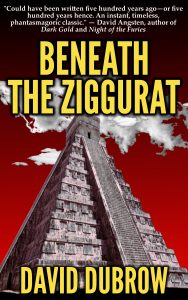 Typically I don’t link to reviews of my work any longer; I appreciate every review, but I just don’t read them anymore. However, Nev Murray, proprietor of Confessions of a Reviewer,

 Comet Press’s latest venture, issue #1 of the magazine
