David Dubrow

Author

  • About Dave
    • Interviews
  • Dave’s Blog
  • Dave’s Fiction
    • The Armageddon Trilogy
      • The Blessed Man and the Witch
      • The Nephilim and the False Prophet
      • The Holy Warrior and the Last Angel
    • Dreadedin Chronicles: The Nameless City
    • Get the Greek: A Chrismukkah Tale
    • Beneath the Ziggurat
    • The Ultimate Guide to Surviving a Zombie Apocalypse
  • Free Stories
    • Hold On
    • How to Fix a Broken World
    • The Armageddon Trilogy Character List and Glossary
  • Social
    • Twitter
    • Facebook
    • Google +
    • Amazon
    • Goodreads

Anecdotes

September 17, 2014 by David Dubrow Leave a Comment

Memory is a tricky thing.  Trying to remember something is often like transferring water from one bucket to the other using a sieve, and the older the memory, the longer the distance between buckets.  When people see us with our little boy, they always say, “Treasure this time, because they grow up so fast.”  There are already things about his short life I don’t remember and have to be reminded of: his first word (“kitty”), his first slice of pizza (an important event in our pizza-loving household), when he started to walk (ten months).

This post is intended to jog my memory of certain events so that they’re not lost forever.  At the time they were funny or meaningful in some way.  Days, weeks or months later, they will lose their luster, and soon I’ll forget them.
We were playing with Legos the other day.  At his age, he has the larger Legos (Lego Duplo).  His mother had built a little boat, and he was building a crane.  I sat and watched: there are only so many Legos to go around, and it’s fascinating to watch the two people I love most in the world doing something creative.
Suddenly, he got a look of great concentration on his face.
I asked, “What’s wrong, kiddo?”
He turned to me, said urgently, “I have to make poopies!” and ran to the bathroom.
We laughed about that for the rest of the day.

###

This morning, as I was putting his bag by the garage door so we wouldn’t forget it when I took him to preschool, I heard him call out, “Daddy!  What’s this?”  I went over and saw him in the bedroom hallway, pointing to something at the threshold of his bedroom door.
It was a snake.  A very small brown snake.  It was something that should not have been there.  Its very presence was not just unwelcome, but surreal.  I’m not particularly afraid of snakes, but you don’t expect to see one indoors at 7:20 AM.
“Well,” I said, keeping my voice calm, “It’s a snake.  That’s definitely a snake.”
“Why’s it there?”
“I don’t know, but it’s got to go.”
The snake was very much alive.  Its tiny tongue flickered out, scenting.  After a few minutes of follies with my wife trying to wrangle it into a plastic container with a sheet of printer paper, I picked it up with oven mitts and tossed it outside.
Nobody knows how it got in.

###

On his Leapfrog there’s a game/book thing called “First Day of Kindergarten.”  It has songs and activities and such, and it describes the first day of kindergarten for four students.  One of the students is a Latina girl named Pilar.
Several months ago, as a joke, I called him Pilar, and he said, immediately, “No me Pilar!”
So it became a game, of sorts, where during a conversation I’d call him Pilar, and he would always come back with, “No me Pilar!”  Always.  Even if I said, “Oh, sorry, Pilar,” he’d retort with “No me Pilar!”  Same tone of voice, same response.  Every time.
Yesterday, I called him Pilar, and he said, “I’m not Pilar.”  It was kind of sad.  I couldn’t get him to say, “No me Pilar.”  He knows how to say it properly now.  That’s over.
However, he still says, “yogret” instead of “yogurt.”  So there’s that.

###

There’s nobody he won’t say hi to.  His mother and I are introverts.  Polite, courteous, but we keep our cards close to the vest.  He’s the opposite.  He needs attention, especially from strangers.
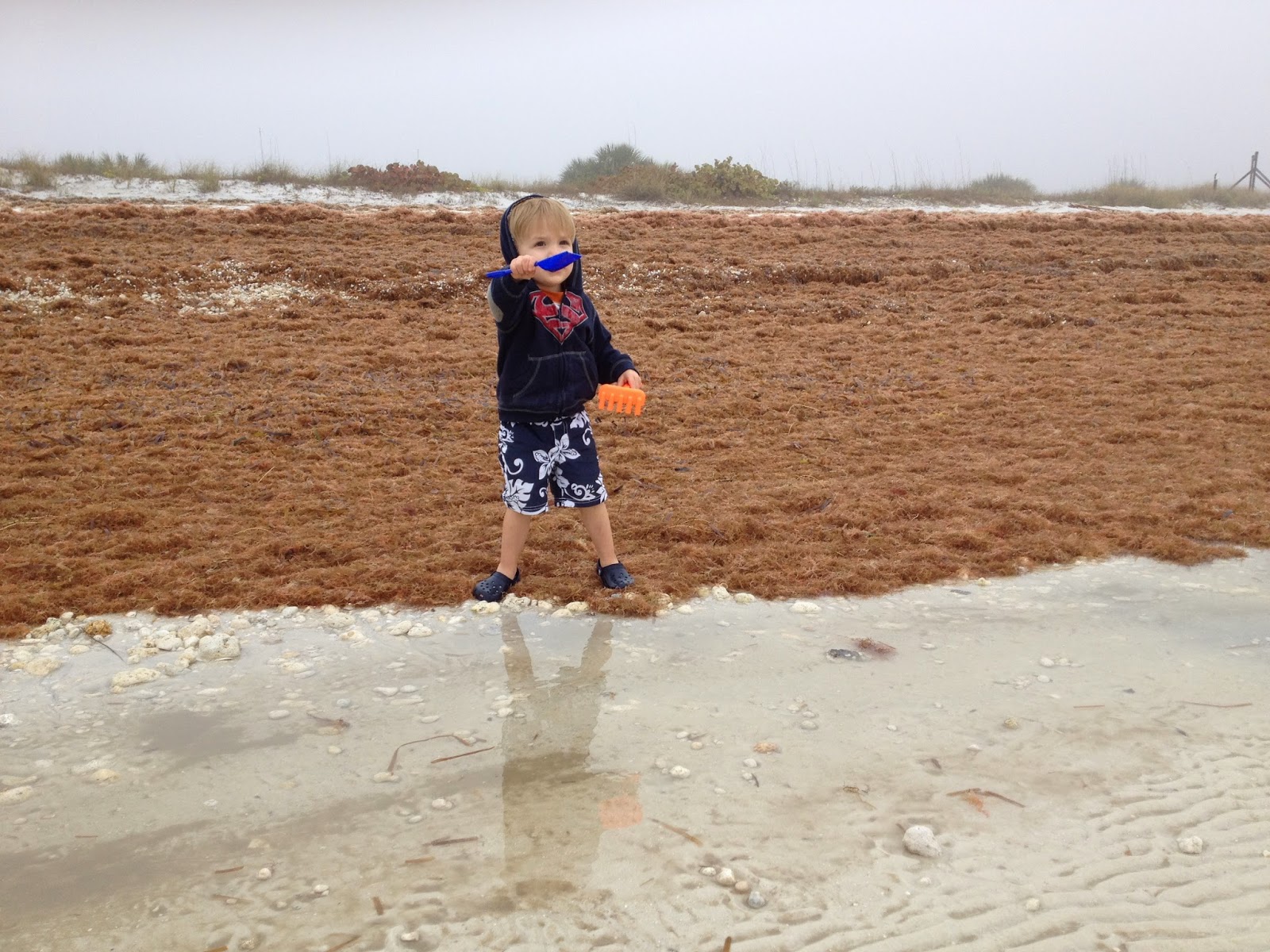
When we were at the beach, there was a young woman walking along, reading aloud from a book that wasn’t the Bible.  She seemed very intent on what she was doing.  It’s a little strange to see someone reading aloud in public.  If she’s carrying a Bible, you automatically assume she’s in some form of prayer.  If she’s carrying Divergent, well, it’s odd.
For reasons of his own, he got up from the mud castle we were building in the wet sand, ran alongside her, and said hi until she noticed him.  She took her face out of the book, smiled genuinely at him, and said hi back.
In that moment, she went from being a little off, a little disconcerting, to beautiful.  Then he came back, we waved to her, and she continued her walk.

Facebooktwitterredditpinterestlinkedinmail

Filed Under: anecdotes, parenthood

Breadhead Friday: Lean Bread

August 29, 2014 by David Dubrow Leave a Comment

A lean bread is one that has very little fat or sugar in it, if any.  Most sandwich breads aren’t lean breads: they’re enriched, so they contain things like sugar, butter, oil, flavorings, and other such things.  They’re great, but I wanted to make the lean bread recipe from Peter Reinhart’s Artisan Breads Every Day.

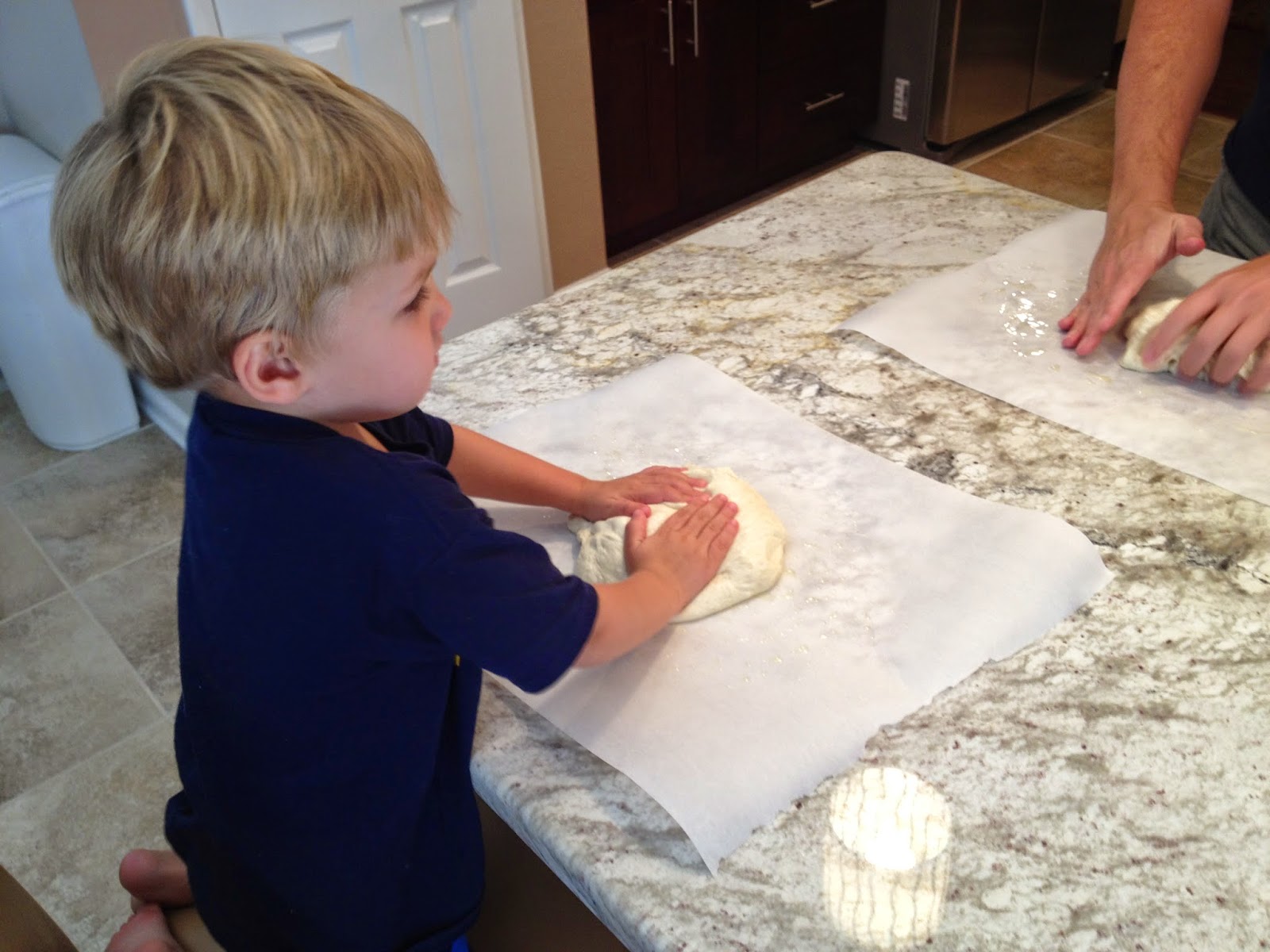
The recipe is very simple: water, flour, yeast, and salt.  You mix until everything’s combined, and instead of kneading it traditionally, you do the stretch-and-fold method four times, going in ten minute intervals.  It’s amazing how just one stretch-and-fold can take a rough, coarse, wet mess and turn it into a glossy, springy dough.

Shaping the dough

To develop flavor in the wheat, this dough requires an overnight rise in the refrigerator.  When you’re ready to bake, you take it out, shape it, and let it rise at room temperature for at least two hours.

More shaping

Typical hearth baking is next: a pan of hot water at the bottom of the oven to create steam, and bake at high heat.

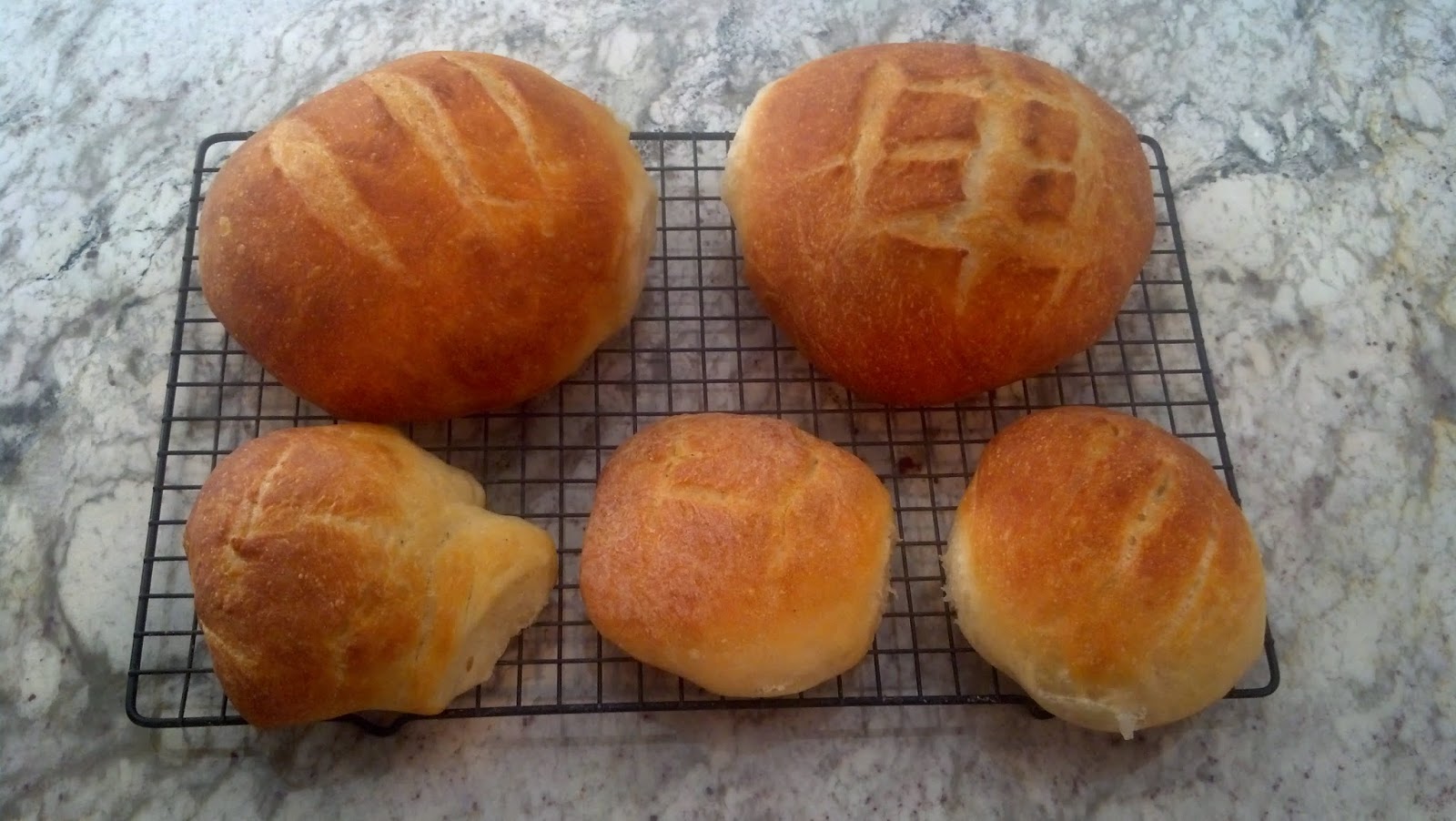
The finished loaves. We both need to work on shaping and scoring

Overall, a fun project, and one that produces tasty bread.  I achieved a few larger holes in the crumb, but the important thing is that my little boy and I did this thing together.  We’ll see if he picks up the bread bug.

Facebooktwitterredditpinterestlinkedinmail

Filed Under: bread, breadhead friday, lean bread, parenthood

Robin Williams, My Mother, and Me

August 13, 2014 by David Dubrow Leave a Comment

Like most people old enough to remember the 1970’s and 80’s, my first memories of Robin Williams were of his role in Mork & Mindy.  I loved the show; my favorite episode was the one where Mork, through the use of over-the-counter cold medication, accidentally shrank himself out of our universe and into a parallel one.  To a nine-year-old, this was mind-ripping stuff.

Robin Williams – Live at the Met remains one of my all-time favorite stand-up routines, right next to Eddie Murphy – Delirious.  Thank you, HBO and PRISM, for broadcasting those laughs a dozen times a day.
I never saw Dead Poets Society, Mrs. Doubtfire, Good Will Hunting, Patch Adams, or several other of the movies that made Williams so beloved and famous.  I liked What Dreams May Come, despite its somewhat maudlin tone.  And he was quite good in The Final Cut; as a former video editor, the film struck a real chord with me.  
That’s pretty much the extent of my experience with his work.  I’m really quite unsentimental when it comes to actors.  I respect what they do, and most of them live lives that are entirely irrelevant to mine.
In the wake of his death, there are renewed calls for a “national conversation” about mental illness, including clinical depression, and I understand.  We all want to make sense of terrible things (most of the time we can’t), and we all want to make sure they don’t happen again (ditto).  The problem is that a national conversation won’t help anyone.
A national conversation wouldn’t have helped my mother, who committed suicide a little over a year ago.
She had been a substance abuser her entire adult life.  Pills, alcohol, you name it.  I suffered abuse from her in ways that I’m quite unable to discuss with anyone.  When my father was dying of cancer, she would steal some of his pain and sleep medications for her own use.  That was what her mental illness, her addiction, made her into.
And none of us ever discussed it.  Not when we were kids, and very little when we became adults.  We didn’t discuss it with her, my father, or anyone else.  Denial comes in many forms, and not talking about something is vastly easier than talking about it.  
Becoming a father myself and watching my wife become a loving mother to our little boy forced me to confront a lot of the unresolved issues related to my mother’s substance abuse.  Mainly, I resolved to give my son a different set of childhood experiences from mine.  That will redound to his benefit, I’m certain.
About a year and a half after my father died, my mother ended her own life.  This is the eulogy I wrote for her funeral:
What my mother did to herself is a dark, terrible thing, but it would be worse if we didn’t learn anything from it.  She suffered greatly from mental illness, and a symptom of that was her substance abuse.  It was, unfortunately, one of the more significant elements of her character, and all of my memories of her are colored by it.

What made her illness all the more cruel was that she was capable of good things, and I know that she wanted to be better than she was.  She just couldn’t.

Substance abuse is very easily denied, both by the abuser and the people around the abuser.  The problem is that denying it doesn’t make it go away.  As difficult as it is, it has to be confronted and acknowledged.  Only then can it be treated.

With my mother, that didn’t happen.  

She won’t get to see her grandchildren grow up and become successful.  She won’t get to visit her husband’s gravesite and reminisce.  She didn’t get the treatment she needed, nor would she have accepted it if it were offered.  Her last days involved intolerable suffering.  

If we can learn from that, perhaps she didn’t die in vain.  
My intent here is not to bleed all over Williams’s casket.  His death isn’t about me or my mother.  Everyone reading this very likely has good memories associated with watching him, and that’s a nice thing.  He’d have liked that, I’m sure.  But as loved a figure as he was, it wasn’t enough.
My mother, who in her later years became a more and more vitriolic, divisive character, didn’t stand a chance.  
I can’t pretend to know what life was like in the Williams household, nor would I presume to.  But, like everything, it’s vital that we take what happened and learn from it.  Don’t just have a national conversation.  Have a personal conversation.

Perhaps they talked about it all day long, and Williams got so sick of it, he had to find a permanent way out.  I don’t know.  Just don’t sweep it under the rug.  Such concealed monsters don’t stay under there, and they don’t get smaller from concealment: quite the opposite.  They tend to take over the whole house.

So we’ll grieve now, and for the lucky majority of us, the grief will be short-lived.  Questions of “why” and “what should I have done differently” are for others to ask, which is a blessing.  We’re spared the pain his closest associates and family must feel, and my sympathies lie with them.  
Whether depressives self-medicate through alcohol or alcoholics are depressed because of their addiction is immaterial: the point is that denying a family problem never solves it.  As ugly and terrible and uncomfortable as it is, you must acknowledge it; only then can treatment begin.

Rest in peace, Robin.  I wish that you hadn’t done what you did.
Facebooktwitterredditpinterestlinkedinmail

Filed Under: mother, parenthood, robin williams, substance abuse, suicide

Charity: Having and Eating Your Cake

August 4, 2014 by David Dubrow Leave a Comment

As part of the process of adopting a child in the United States, we had to attend parenting classes.  These classes taught things like dealing with an emotionally abused or traumatized child, parenting a child from a different culture from you, children with attachment disorder, and several other topics.

For the most part, it was a waste of time.  Much of what was taught wouldn’t apply to our situation.  The agency we went through for our certification did most of their business through foreign adoptions of Ethiopian children.  In fact, we were their first domestic couple.

At the beginning of one class, while we were sitting around waiting for the state-mandated instructor to tell us that a common excuse for why African Americans don’t adopt white babies is because they don’t know how to take care of their hair, one adoptive parent said something extraordinary.  He said, “When I tell my friends that one of the reasons we want to adopt is because we want to do a good deed, they ask me why don’t we just donate the money instead?”  The question had frustrated him, and he didn’t have a good answer for it.

This is a picture of a cake I made in 2009 for illustration purposes.

The nature of the question is instructive in itself, and describes an extremely common mode of thinking: that the value of a good deed, of charity, is measured in large part by how “selfless” the deed is.  As if you’re not supposed to get anything out of performing good works.

That’s ludicrous.  It speaks of a mindset that values intentions over results.

There’s no reason to think that one cannot do a good, even selfless act and still personally profit from it.  The two notions are not mutually exclusive.  Charitable acts don’t have to be their own reward, including the adoption of a child.  One can fulfill the twin desires to become a parent and do a good deed simultaneously, without reservation.

A fed, loved, cared-for child is the result.  The intention is immaterial.

Contrast this, then, with confiscation of property by the government to achieve similar ends: this is not charity, nor is it virtuous.  When the fruits of your labor are taken from you to maintain social programs, it is not charity, because your choice to give has been taken from you at the point of a gun.  If you think this is extreme, try not paying your taxes for a while.  And talk to Wesley Snipes.

Ultimately, we live in a world of results.  Your intentions cannot be measured, nor should they be.  What matters is that you do give, not why.  Anyone seeking to determine the value of your charity by how little you personally gain from it is someone who would prefer to rely on state confiscation rather than good works to achieve virtuous ends.  In a free society, it simply doesn’t work.

Facebooktwitterredditpinterestlinkedinmail

Filed Under: adoption, ethics, parenthood

Adoption Stories: The Beginning

July 31, 2014 by David Dubrow Leave a Comment

I wrote a piece for Clancy Tucker’s blog on domestic adoption in the state of Colorado.  It outlines, in very broad strokes, the process of adopting a baby boy, like we did.

There’s a great deal more to it, and as always, God is in the details.  (Or, depending on one’s mood, the Devil is in the details.)  Future pieces will describe some of these experiences more specifically.

Unless you’ve done it, unless you’ve been there, it’s not what you think.

Take a look at it on Clancy’s blog.

Facebooktwitterredditpinterestlinkedinmail

Filed Under: adoption, parenthood, son

A Small Collection of Conversations in the Car with My Three-Year-Old Son

July 28, 2014 by David Dubrow Leave a Comment

Son: I’m gonna eat you all up like a hot dog, Daddy.
Me: No!
Son: Put ketchup and mustard on you.
Me: No, no!
Son: Num num num I’m eating you up!
Me: Oh God no, stop!
Son: Num num num num!  Urp.  All gone!
Me: I guess that’s it, then.

~~~

Me: *peering out through the windshield at the rain* Nice day for the ducks, eh?
Son: Squirrels, too.
Me: Why the squirrels?
Son: They’re nice and warm in the tree.
Me: What about the turtles?
Son: No.

~~~

Me: Are you gonna get tattoos when you grow up?
Son: Daddy, please sit on…ahhh…please sit on, uh…please sit on…ahhhh…please sit on…sit on MY lap. Please sit on MY little lap.
Me: Your lap’s not big enough for me to sit on, buddy-roo.
Son: I have money in my pocket.
Me: Where did you get money? Can I have some?
Son: No.

~~~

Me: What did you have for your snack today?
Son: No me remember.
Me: Yes, you do!  It was an hour ago.  Can you tell me what you ate?  Was it cookies?
Son: Yes.  Cookies.
Me: You’re just saying that because I said it.  Did you really have cookies?
Son: Uh-huh.
Me: What kind of cookies?  Did they have cheese on them?
Son: Uh-huh.
Me: And peanut butter?
Son: Uh-huh.
Me: And beans?
Son: Uh-huh.
Me: I think you’re making that up.
Son: No me remember.

Facebooktwitterredditpinterestlinkedinmail

Filed Under: critical conversations, parenthood, son, toddler

  • « Previous Page
  • 1
  • 2
  • 3
  • Next Page »

"It began to drizzle rain and he turned on the windshield wipers; they made a great clatter like two idiots clapping in church." --Flannery O'Connor, Wise Blood

"Squop chicken? I never get enough to eat when I eat squop chicken. I told you that when we sat down. You gotta give me that. I told you when we sat down, I said frankly I said this is not my idea of a meal, squop chicken. I'm a big eater." --John O'Hara, BUtterfield 8

I saw the 1977 cartoon The Hobbit as a little boy, and it kindled a love of heroic fantasy that has never left me. Orson Bean's passing is terrible news. Rest in peace.

Obviously, these young people have been poorly served by their parents, but the honest search for practical information should be lauded, not contemned.

You shouldn't look at or use Twitter, and this story is another perfect example. There's so much that's wrong here that it would take a battalion of clergy, philosophers, and psychologists to fully map it out, let alone treat the issue.

This is the advertising copy for Ilana Glazer's stand-up comedy special The Planet Is Burning: "Ilana Glazer‘s debut standup special is trés lol, and turns out - she one funny b. Check out Ilana’s thoughts on partnership, being a successful stoner adult, Nazis, Diva Cups, and more. Hold on to your nuts cuz this hour proves how useless the patriarchy is. For Christ’s sake, The Planet Is Burning, and it’s time a short, queer, hairy New York Jew screams it in your face!" This is written to make you want to watch it.

In the midst of reading books about modern farming, the 6,000 year history of bread, and ancient grains, I found this just-published piece by farmer and scholar Victor Davis Hanson: Remembering the Farming Way.

"I then confront the decreasing power of the movement in order to demonstrate the need for increased theorizations of the reflexive capacities of institutionalized power structures to sustain oppositional education social movements." Yes. Of course.

You should definitely check out Atomickristin's sci-fi story Women in Fridges.

As it turns out, there may yet be some kind of personal cost for attempting to incite a social media mob into violence against a teenage boy you don't know, but decided to hate anyway because reasons.

One of the biggest problems with internet content is that the vast majority of sites don't pay their writers, and it shows in the lack of quality writing. It's hard to find decent writers, and harder to scrape up the cash to pay them. This piece is a shining example of the problem of free content: it's worth what you pay for.

If you're interested in understanding our current cultural insanity, the best primer available is Douglas Murray's The Madness of Crowds. Thoughtful, entertaining, and incisive.

More laws are dumb. More law enforcement is dumb. The only proper response to violence is overwhelming violence. End the assault. There's a rising anti-semitism problem in New York because Jews who act like victims are being victimized by predators. None of these attacks are random. Carry a weapon and practice deploying it under duress. Be alert and aware. I don't understand why the women Tiffany Harris attacked didn't flatten her face into the pavement, but once word gets around that the consequences of violence are grave, the violence will lessen.

When are you assholes going to understand that this stupidity doesn't work any longer? Nobody gives much of a damn if you think we're sexist because we don't want to see a movie you think we should see. It only makes us dislike you that much more, and you started out being an unlikable asshole. Find a new way to shame normal people.

The movie Terms of Endearment still holds up more than 35 years later, and if you're looking for a tearjerker, this is your jam. One element that didn't get a lot of mention is, at the end, when Flap, with a shrug, decides that his mother-in-law will become the mother of his children once Emma dies. He abandons them, and nothing is made of it. This always troubled me.

You need to read this story the next time you feel the urge to complain. And if you need a shot of admiration for another family's courage, check this out.

Progressive political activist and children's author J.K. Rowling finds herself on the wrong side of a mob she helped to create. The Woke Sandwich she's been trying to force-feed others since she earned enough f-you money doesn't taste as good as it looks when she's obliged to take a bite.

I need you to check out The Kohen Chronicles and pray for this family. Their 5-year-old son has cancer.

Currently, the movie Star Wars: The Rise of Skywalker stands at 55% at Rotten Tomatoes. Don't forget that these are the same reviewers who not only adored the absolutely execrable The Last Jedi, but insisted that you were a MAGA hat-wearing incel white supremacist manbaby for not loving The Last Jedi. So either The Rise of Skywalker is an objectively bad film, or it simply wasn't woke enough to earn plaudits from our movie-reviewing moral and intellectual betters.

It's easy to hate the older pop bands like Genesis for their popularity, but they were capable of genius, and it shows in No Son of Mine.

If you want to know which identity group has more clout, read this story of the Zola ads on the Hallmark Channel.

Rest in peace, René Auberjonois. I remember you from Benson as a kid. As an adult, I remember you as Janos Audron in the Legacy of Kain video game series. You made every role you were in a classic.

Elf on a Shelf Follies, Part 2:
8-year-old: I wrote the elf a note! I hope he writes back.
Me: What did you write?
8yo: I asked if he has any friends.
Me: What if he says it's none of your business?
8yo: *eyes grow dark and glittering* Then I'll...touch him.
Me: Ah. Mutually assured destruction, then.

Elf on a Shelf Follies, Part 1: My 8-year-old got an Elf on the Shelf the other day. The book it came with tells a story in doggerel about this elf's purpose, which is to spy on the kid and report his doings to Santa Claus, who would then determine if the kid is worthy for Christmas presents this year. The book also said for the kid not to touch him, or the magic would fade, and for the family to give the elf a name. I wanted to name him Stasi. I was outvoted.

Actor Billy Dee Williams calls himself a man or a woman, depending on whim; his character Lando Calrissian is "pansexual," and his writer implies that he'd become intimate with anyone or anything, including, one presumes, a dog, a toaster, or a baby. J.J. Abrams is very concerned about LGBTQ representation in the Star Wars universe. This is Hollywood. This is Star Wars. This is what's important to the people in charge of your cinematic entertainment. Are you not entertained?

The funniest thing on the internet today is the number of people angry over an exercise bike commercial. Public outrage is always funny. Always.

One of the biggest mistakes the United States has ever made since WWII was recruiting for clandestine and federal law enforcement organizations at Ivy League schools. The best talent pools were/are available from local law enforcement and military veterans, with their maturity and, most importantly, field experience. We've been reaping the costs of these terrible decisions for decades, culminating in a hopelessly politicized, sub-competent FBI and CIA.

Watching Fauda seasons 1 and 2 again in preparation for season 3 to be broadcast, one hopes, in early 2020. Here's my back-of-the-matchbook review of season 2.

Every day I try to be grateful for what I have, even in the face of the petty frustrations and troubles that pockmark a day spent outside of one's living room, binge-watching Netflix. We live lives of ease in 21st century America, making it enormously difficult to do anything but take one's countless blessings for granted. Holidays like the just-passed Thanksgiving are helpful reminders. There's a reason why people call the attitude of a thankful heart practicing gratitude, not just feeling grateful. You have to practice it. You have to remind yourself of what you have. It's the work of a lifetime.

Held Back: A Recent Conversation.
8-year-old: Oh, and Jamie was there, too. He was in my first grade class two years ago.
Me: Wasn't he held back a year?
8yo: Yeah. It's because he kept going to the bathroom with the door open.
Me: No way!
8yo: And girls saw.
Me: That's not right. They're not going to hold a kid back a whole year over that.
8yo: Well, that's what he told me.
Me: Sounds fishy.
8yo: I believe him.
~fin~

It's right and good to push a raft of politically correct social justice policies on everything else under the sun, but when social justice invades Hollywood, that's just a bridge too far, says Terry Gilliam. Sorry, Terry: you helped make this sandwich. EAT IT.

Rob Henderson's piece on luxury beliefs will have you nodding your head over and over again...unless you subscribe to these luxury beliefs, in which case you'll get mad.

I've made the Saturday bread from Flour Water Salt Yeast so often that I've memorized the recipe. It never disappoints. Never. The same recipe works well for pizza, too.

Liberty doesn't mean the freedom to do anything you want. The true definition of liberty is the ability to choose the good. Anything less is libertinism.

Archives

My Social Media Links

  • Twitter
  • Facebook
  • Google +

Author Links

  • Amazon Author Page
  • Goodreads

Copyright © 2026 · Author Pro Theme on Genesis Framework · WordPress · Log in