David Dubrow

Author

  • About Dave
    • Interviews
  • Dave’s Blog
  • Dave’s Fiction
    • The Armageddon Trilogy
      • The Blessed Man and the Witch
      • The Nephilim and the False Prophet
      • The Holy Warrior and the Last Angel
    • Dreadedin Chronicles: The Nameless City
    • Get the Greek: A Chrismukkah Tale
    • Beneath the Ziggurat
    • The Ultimate Guide to Surviving a Zombie Apocalypse
  • Free Stories
    • Hold On
    • How to Fix a Broken World
    • The Armageddon Trilogy Character List and Glossary
  • Social
    • Twitter
    • Facebook
    • Google +
    • Amazon
    • Goodreads

A Quartet of Movie Reviews

September 19, 2018 by David Dubrow 1 Comment

Sometimes I see movies. Sometimes I enjoy them.

And sometimes I don’t.

—

If you’re looking to be bored for long stretches of time, I can’t think of a better sci-fi thriller than Alien Invasion: S.U.M.1. It stars Iwan Rheon as the titular character S.U.M.1, and by the end of the film you’ll be quite familiar with the sight of his naked backside. The story is that an alien race known as the Nonesuch has wiped out most of the human population on Earth; the rest live underground except for soldier-types like S.U.M.1, who do solitary 100-day tours of duty inside concrete towers, looking for human survivors to save and Nonesuches to flee from. Between the silly plot, terrible storytelling, and risible dialogue, I found this film to be a gigantic waste of time. The only sympathetic character was the white rat Doc, who, unfortunately, didn’t make it. (They never do.) The movie’s no doubt supposed to be a gritty tale of isolation and mental anguish, but it failed to build up to anything worth paying attention to. I pray Doc finds a better agent.

I was really looking forward to Hereditary. Who doesn’t like Toni Collette and Gabriel Byrne? Nobody I want to know. Yes. What? Anyway, it starts out terribly dark and depressing and disquieting, and none of the characters are particularly likable but it’s okay because the visuals are so darned creepy, and then something inexpressibly awful happens 40 minutes in and I spent the rest of the film deciding if I should turn it off or not because it stopped being the least bit enjoyable and became a litany of dreadful things happening to people I didn’t care about. The supernatural elements would have been more interesting if they’d been fleshed out better. The horrific images would have had more punch if I disliked the characters less. Director Ari Aster said, “I wanted the film to function first as a vivid family drama before I even bothered attending to the horror elements,” and I believe him, because we got a lot more of the family drama than the horror, which made neither genre work. This was no Ordinary People or Terms of Endearment, and it wasn’t The Conjuring or The Amityville Horror, either.
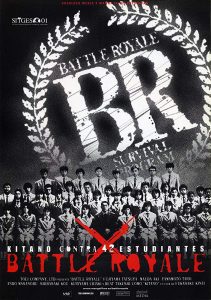
About eighteen years after its release, I finally got to see Battle Royale. It’s an uplifting (kidding) tale of a bus filled with Japanese high-schoolers that gets taken to a deserted island. The high-schoolers are then given weapons and told to kill each other, and the winner of this disgusting game is allowed to live. Plenty of books and movies owe a lot to this film (looking at you, Hunger Games) in both story and visuals. Great care was taken to make us like these kids, and to see them fight and die and try to save each other is more wrenching than you might think. There’s a lot of blood and gore, but it’s not as sickening as subsequent Japanese horror efforts tended to get. Battle Royale is the OG of this bizarre genre, and if you want to get your tragic nihilist violence boner on, give it a look.

For a second helping of Japanese horror, I bring you the movie Tag, known as Riaru Onigokko in Japan. Completely and utterly incomprehensible, it tackles alternate universes, the nature of reality, video games, and identity in the same way that Jackson Pollock addressed realism in painting. I defy anyone to make sense of anything that happens in this film. As is typical for Japanese productions, the special effects were terrific, especially when showing some unbelievably horrific stuff. I didn’t like the movie, but I didn’t not like it. Some of the visuals are had to forget. Does that make it a successful film? To quote Rudy from Season One of Survivor, I don’t know.


Facebooktwitterredditpinterestlinkedinmail

Filed Under: Uncategorized Tagged With: battle royale, hereditary, movie review, movie reviews, s.u.m.1, tag

The Shape of Water: A Discussion

August 22, 2018 by David Dubrow 3 Comments

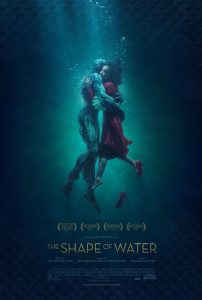
After watching Guillermo del Toro’s The Shape of Water, I’m not at all surprised that it won a Best Picture Oscar.

It was terrible.

Big-budget films can have an awfulness all their own, quite different from their low-budget counterparts; regular readers of this site know that I’ve seen more than my share of horrible low-to-no-budget movies, so I know the difference. In this case, with The Shape of Water, the movie’s biggest flaw, outside of its dreariness, was how completely cliched the story was. If you’re looking for a cinematic exercise in virtue-signaling where we, as a woke nation, can look back at a fictional 1960’s America and shudder in horror, you’ll love this film. Every tired, hackneyed trope Hollywood has ever shat out shines bright and proud in The Shape of Water, which tells you everything you need to know about the kinds of people who nominate and vote for the Academy Awards.

To talk about it I need to spoil it. Which isn’t a problem because this movie’s as rancid as week-old fish.

The story’s familiar enough: woman meets fish in secret scientific facility, woman steals fish to live in her bathtub, woman fucks fish, woman and fish live happily ever after and as it turns out woman is part fish herself so it’s all good and not at all disgusting.

As this is a character-driven movie, let’s take a look at the main characters.

Elisa: the protagonist. She can’t speak, but she can masturbate in the bathtub. A lot. She’s the typical Hollywood handicapped character: a saintly figure that can do nothing but good. As such, she goes through no development or maturation during the film. She doesn’t need to. You can’t improve on perfection.

Strickland: the antagonist. The polar opposite of Elisa in that he’s irredeemably evil and incapable of development because when you’re as malevolent as he is, there’s no saving you. He’s also racist and sexist. And, of course, he’s a Bible-thumper, because Hollywood knows that Christians are Bad People.

Giles: the gay friend. As Elisa’s bestest, gayest buddy in the whole wide world, he exists only to show the audience how homophobic Americans were in the 1960’s. Fired from his job as an artist for an advertising firm (Mad Men!) for reasons unclear but probably having to do with his homosexuality, he develops an attraction for the owner of the local diner. The diner owner, about thirty years younger than Giles and not gay, is of course evil for refusing Giles’s advances, and turns out to be racist to boot because he won’t let a black couple sit at the lunch counter.

Zelda: the black friend. Normally, mature black women act as the moral center of these kinds of movies, but in The Shape of Water, we don’t need a moral center: Elisa the protagonist is the moral center. Instead, Zelda exists to show the audience how racist Americans were in the 1960’s, particularly Bible-thumping Americans. Oh, and she occasionally translates Elisa’s sign language for other characters. All of the good people know sign language. All of the evil people don’t.

The Asset: the fish/amphibian creature/love interest. Looks almost exactly like Abe Sapien. Eats eggs like Abe Sapien. Is not Abe Sapien, according to del Toro. Has magical powers. And a hidden penis.

All the male characters who aren’t fish are homosexuals, Russian spies, stupid, cowardly, or evil. Go figure.

The visuals were dreary, the special effects amazing. That’s where the budget went.

I understand that it’s supposed to be a fairy tale. A dark fantasy. But if it is, why include the bizarre scene of Strickland fucking his creepy wife? Or the Russian spy subplot? The theme/tone was uneven at best.

For comparison, let’s take a look at some previous Best Picture Oscar winners: Casablanca in 1943, The Bridge on the River Kwai in 1957, A Man for All Seasons in 1966, The Godfather in 1972, Amadeus in 1984, Schindler’s List in 1993, Million Dollar Baby in 2004, and The King’s Speech in 2010.

This is the kind of film that wins the Academy Award for Best Picture in 2017: a paean to moral preening and the evils of religious white men. It sucked.

Facebooktwitterredditpinterestlinkedinmail

Filed Under: Uncategorized Tagged With: movie review, social justice, the shape of water

Bits and Pieces 3/22/2018

March 22, 2018 by David Dubrow 2 Comments

I’ve been busy of late, and when prioritizing writing tasks, the blog generally finds itself low on the list. In addition to taking on duties in my neighborhood’s Homeowner’s Association (those jackboots won’t shine themselves), I’m working on a short story I was asked to write for a literary magazine, finishing up the critical second draft of The Holy Warrior and the Last Angel, laying the groundwork for a sequel to Appalling Stories (Appalling Stories 2: Even More Appalling Stories is the working title), and editing the digital magazine Creators Unite, a quarterly publication focusing on indie art, filmmaking, and publishing.

—

Much has been made about Disney’s movie A Wrinkle in Time, based on Madeleine L’Engle’s novel. The film has received mediocre reviews which the director has attributed in part to racism instead of deliberate choices made in production that altered the story and themes. Rather than addressing teenage awkwardness and the difficulty of not fitting in with one’s peers, the filmmakers focused on racial diversity. They removed references to the Bible and Christianity in favor of feel-good spiritualism. There’s an emptiness behind the production that viewers understand, and the quality (and box office returns) suffers.

I read the first three books of L’Engle’s Time Quintet in middle school, and enjoyed them quite a lot, so now, decades later, I’ve begun reading them again. The depiction of Mrs Who, Mrs Which, and Mrs Whatsit as angels, as former stars, is as affecting now as it was for me then. The bizarre mixture of science, faith, and fantasy works in a way few novels can hope to achieve. Thematically, A Wrinkle in Time deals with the concept of space, of distance, of love and acceptance. A Wind in the Door goes deeper, focusing on scale, on the connection of all things within God’s plan and how everything affects everything else. And A Swiftly Tilting Planet, which I’m about a third of the way through, clearly addresses time, of the past echoing into the future. These are thoughtful books, texts that both children and adults can appreciate. But, in many respects, they reflect the Cold War era in which they were written: the Earth is a dark place, filled with the likelihood of utter doom at any time. Nuclear war, inner city violence, environmental disaster, and societal decay eat at the periphery, and the entire planet is shadowed, fighting for its life against darkness.

It’s unfortunate that the filmmakers, in their desire to update the story according to Social Justice concerns, ruined what could have been a transcendent cinematic experience. Social Justice Warriors never create new things: they burrow into existing works, eviscerate them, and demand that you appreciate the mutilation they’ve inflicted. Anything less is racism. Sexism. Bigotry.

—

The Ritual is very much a movie made by horror fans for horror fans, and on that level I enjoyed it a great deal. There’s the protagonist haunted by a terrible past failing, the irritating character who gets even more irritating as the story progresses (so he survives longer than most of the characters), the gung-ho guy who dies first, and the likable fellow who lasts just long enough for you to feel bad about his horrible demise. It doesn’t break any new ground, but if you’re looking for a good old-fashioned wilderness horror film, The Ritual‘s your best bet.

Facebooktwitterredditpinterestlinkedinmail

Filed Under: Uncategorized Tagged With: a wrinkle in time, horror, madeleine l'engle, movie review, the ritual

2017 in Review: Top Five Movies

December 19, 2017 by David Dubrow 1 Comment

I’ve watched fewer movies this year than in previous; between writing, spending time with family, and the occasional television program, there hasn’t been time for it. Also, my overall discontent with Hollywood and its emphasis on empty, worthless franchise projects makes finding a movie worth seeing a difficult prospect at best.

And yet I did see stuff I liked. Here are my top five movies of 2017:

  • 5: The Theta Girl: Trippy and bizarre in all the right ways, The Theta Girl proved that a low budget doesn’t automatically equal low quality in filmmaking. When it wasn’t funny it was grotesque, and despite the uneven acting it had some unforgettable scenes. If you have the opportunity to see it, pop some Lemonheads and put your peepers on the screen.
  • 4: Wichita: A movie I dug despite a draggy middle section, it was full of pleasant surprises. Trevor Peterson as Jeb was the stand-out, and if you’re going to hang your movie on a single actor’s performance, he was the perfect pick. Creepy but vulnerable, he made the film.
  • 3: They Call Me Jeeg: This year I’ve made my disgust with superhero films crystal clear, but They Call Me Jeeg turns the entire genre inside-out, making it fresh and worth paying attention to. Enzo, the protagonist, goes from being kind of disgusting to sympathetic to heroic, which is movie magic the likes of which James Cameron has never achieved. Check it out.
  • 2: Burn: It’s a short film, and in the interest of full disclosure was written and produced by Chris Barnes, proprietor of The Slaughtered Bird. Putting aside my biases, I really liked this movie. Punchy, disquieting, and extremely well-done despite the minimal budget, it takes Michael Keaton’s My Life and eviscerates it with a meat hook.
  • 1: Deep in the Wood: When considering my favorite films of the year, there was never any question that Deep in the Wood was going to sit at the top of the list. We use terms like “affecting” and “unforgettable” a lot in movie reviewing, but this one takes the cake for intensity. Every scene is meticulously planned, portrayed, and produced for maximum effect. I loved it.

Next year, I may switch from movies to Top Five TV Shows of 2017, but we’ll see.

Facebooktwitterredditpinterestlinkedinmail

Filed Under: Uncategorized Tagged With: burn, deep in the wood, horror, movie review, the slaughtered bird, theta girl, they call me jeeg, Top 5, wichita

Movie Review: I Saw the Devil

August 15, 2017 by David Dubrow Leave a Comment

The horror/thriller movie I Saw the Devil came up in conversation not long ago, and it reminded me that I had once written a review of it for the horror site Ginger Nuts of Horror. Jim Mcleod, the proprietor of Ginger Nuts of Horror, deleted all my reviews from his site and called me a Nazi for expressing, in my own space, opinions that millions and millions of other people share. As the review and the movie are both too good to let slide into obscurity, I reprint it here for your reading pleasure.

Jee-woon Kim’s I Saw the Devil is an incredibly thoughtful film in both theme and presentation; it’s clear that every frame was chosen to provoke a reaction, to get you to think and feel a certain way.  Gory, violent, almost comical at times, it sticks with you the way few movies can.  While the theme of revenge and its fundamental futility has approached cliché in modern cinema, Jee-woon Kim manages to take it in a new, disturbing direction.  It’s not a mere cautionary tale about the cost of vengeance, nor is it a ho-hum meditation on a man becoming the monster he hunts, but something different, something better: a story of how violence in any form can poison both the actor and the victim, no matter how justified.

The film’s attention to detail is immediately arresting: a cart heaped with the remains of one of serial killer Kyung-chul’s victims appears at first a mess of pink flesh until you see the brown nipple of a breast peek out, reminding you that this meat used to be a young woman.  Our first glimpse of the secret agent protagonist shows the angelic perfection of his face just so, foreshadowing that he can only descend from here on out.  The apparent throwaway scene of Kim Soo-hyeon interviewing Kyung-chul’s estranged parents and unwanted son becomes very important later in the film.  From the blood to the effortless malice Kyung-chul exudes, everything is meaningful, everything makes sense.

Fans of Chan-wook Park’s Revenge Trilogy will appreciate Min-sik Choi’s performance as the utterly loathsome Kyung-chul: he’s not quite the badass he was from Oldboy, but he’s far more disturbing.  We’re not shown why he kills young women or what makes him a serial killer, which is a deliberate choice: as the Devil to Kim Soo-hyeon’s angel, he doesn’t need reasons to be evil.  He just is.  His gradual disintegration through the film tells us that evil such as his cannot be conquered by anything other than decisive, righteous action.  Kim Soo-hyeon’s petty malice can injure or even maim him, but not stop him.

Kim Soo-hyeon’s descent is more subtle: his prolonged revenge against Kyung-chul serves to knock him from his moral perch as a grieving man seeking to catch his fiancée’s killer, but doesn’t mark him, as such.  By not killing or apprehending Kyung-chul at their first meeting, he takes responsibility for Kyung-chul’s subsequent acts of violence and murder.  His game with the serial killer has a terrible cost, and not just to him.

The violence and gore, while affecting, isn’t gratuitous; in a film about a good person and a horrible person doing appalling things, the blood drives the story.  There are a few hard parts to watch, and they do stay in memory after the credits roll.  Despite the lengthy runtime, it’s a riveting, stylistic movie worth at least one sitting.

Facebooktwitterredditpinterestlinkedinmail

Filed Under: Uncategorized Tagged With: horror, i saw the devil, korean, movie review, revenge

Movie Review: They Call Me Jeeg

July 25, 2017 by David Dubrow 3 Comments

I’ve talked about my dislike of the current state of superhero/science fiction franchises here and here. They’re bloated, overdone, past their prime, and exist as money-making efforts to draw nostalgia-soaked dollars from Boomers and Gen-Xers instead of reflecting today’s culture.

It doesn’t mean, however, that the superhero genre is dead. Movies like They Call Me Jeeg prove that there’s not just life in the genre, but relevance, too.

Enzo, the protagonist of the film, isn’t the kind of hero we want, but he is the hero we deserve. The hero we’ve elevated to primary status in our culture’s misguided quest to eliminate traditional heroic traits in favor of anti-heroic qualities. Faith is pushed out of public life to uphold the fictional value of “separation of church and state.” Honor is considered a quaint, archaic tradition no longer practiced in everyday society. And bravery has been so diluted by overuse that too many of us no longer know the difference between the risking of one’s life to save another and telling one’s parents one’s choice of bedroom partners: both are considered equally courageous.

Victoria Dougherty talks about the devaluation of the term hero here. Thanks to Sean Carlin for pointing this out.

For his part, Enzo possesses very little of these qualities: he’s a petty crook, a ne’er-do-well who falls into a canister of radioactive waste in the Tiber River, emerges with superhuman powers, and uses them to advance his meager position in life. He falls in with a young woman who thinks that he’s the incarnation of an anime superhero named Hiroshi from a cartoon called Steel Jeeg, and the story proceeds from there.

With his sleepy eyes and unkempt, unheroic appearance, Claudio Santamaria is the perfect choice to play Enzo, a man who eats nothing but vanilla pudding and spends his first ill-gotten windfall on pornographic DVDs. You can’t like him at first, then you don’t want to like him, and then you’re rooting for him by the end of the film. Ilenia Pastorelli as Alessia brings a fragility to her role that makes her steal every scene she’s in: she could explode at any moment, so you have to keep an eye on her. Everyone else exists as temporary allies or, for the most part, antagonists. Enzo’s opposite number is Zingaro the Gypsy, a small-time gang leader who Luca Marinelli plays with hilariously violent panache.

Our culture’s obsessions with social media, viral videos, and reality television are aptly lampooned throughout the film, showing us how difficult it is to have a truly secret identity in the 21st century, particularly if you find yourself having to do noteworthy things just to get by. Enzo’s powers, despite that we’ve seen them in superhero-soaked presentations across all known media platforms, still manage to elicit awe, particularly in how he makes use of them.

The movie does hit a couple of snags: it’s a bit long, perhaps longer than it needed to be, so it drags in parts. And there’s a subplot about fascist terrorists in Rome that wasn’t worked into the plot terribly well. Still, it deftly combines humor, pathos, and social commentary in an entertaining, unforgettable presentation that makes you wish for a sequel, even though you know it won’t happen.

They Call Me Jeeg is a great movie. What’re you waiting for? Get watching.

Facebooktwitterredditpinterestlinkedinmail

Filed Under: Uncategorized Tagged With: foreign film, italian, movie review, science fiction, superhero, they call me jeeg

  • « Previous Page
  • 1
  • 2
  • 3
  • 4
  • 5
  • Next Page »

"It began to drizzle rain and he turned on the windshield wipers; they made a great clatter like two idiots clapping in church." --Flannery O'Connor, Wise Blood

"Squop chicken? I never get enough to eat when I eat squop chicken. I told you that when we sat down. You gotta give me that. I told you when we sat down, I said frankly I said this is not my idea of a meal, squop chicken. I'm a big eater." --John O'Hara, BUtterfield 8

I saw the 1977 cartoon The Hobbit as a little boy, and it kindled a love of heroic fantasy that has never left me. Orson Bean's passing is terrible news. Rest in peace.

Obviously, these young people have been poorly served by their parents, but the honest search for practical information should be lauded, not contemned.

You shouldn't look at or use Twitter, and this story is another perfect example. There's so much that's wrong here that it would take a battalion of clergy, philosophers, and psychologists to fully map it out, let alone treat the issue.

This is the advertising copy for Ilana Glazer's stand-up comedy special The Planet Is Burning: "Ilana Glazer‘s debut standup special is trés lol, and turns out - she one funny b. Check out Ilana’s thoughts on partnership, being a successful stoner adult, Nazis, Diva Cups, and more. Hold on to your nuts cuz this hour proves how useless the patriarchy is. For Christ’s sake, The Planet Is Burning, and it’s time a short, queer, hairy New York Jew screams it in your face!" This is written to make you want to watch it.

In the midst of reading books about modern farming, the 6,000 year history of bread, and ancient grains, I found this just-published piece by farmer and scholar Victor Davis Hanson: Remembering the Farming Way.

"I then confront the decreasing power of the movement in order to demonstrate the need for increased theorizations of the reflexive capacities of institutionalized power structures to sustain oppositional education social movements." Yes. Of course.

You should definitely check out Atomickristin's sci-fi story Women in Fridges.

As it turns out, there may yet be some kind of personal cost for attempting to incite a social media mob into violence against a teenage boy you don't know, but decided to hate anyway because reasons.

One of the biggest problems with internet content is that the vast majority of sites don't pay their writers, and it shows in the lack of quality writing. It's hard to find decent writers, and harder to scrape up the cash to pay them. This piece is a shining example of the problem of free content: it's worth what you pay for.

If you're interested in understanding our current cultural insanity, the best primer available is Douglas Murray's The Madness of Crowds. Thoughtful, entertaining, and incisive.

More laws are dumb. More law enforcement is dumb. The only proper response to violence is overwhelming violence. End the assault. There's a rising anti-semitism problem in New York because Jews who act like victims are being victimized by predators. None of these attacks are random. Carry a weapon and practice deploying it under duress. Be alert and aware. I don't understand why the women Tiffany Harris attacked didn't flatten her face into the pavement, but once word gets around that the consequences of violence are grave, the violence will lessen.

When are you assholes going to understand that this stupidity doesn't work any longer? Nobody gives much of a damn if you think we're sexist because we don't want to see a movie you think we should see. It only makes us dislike you that much more, and you started out being an unlikable asshole. Find a new way to shame normal people.

The movie Terms of Endearment still holds up more than 35 years later, and if you're looking for a tearjerker, this is your jam. One element that didn't get a lot of mention is, at the end, when Flap, with a shrug, decides that his mother-in-law will become the mother of his children once Emma dies. He abandons them, and nothing is made of it. This always troubled me.

You need to read this story the next time you feel the urge to complain. And if you need a shot of admiration for another family's courage, check this out.

Progressive political activist and children's author J.K. Rowling finds herself on the wrong side of a mob she helped to create. The Woke Sandwich she's been trying to force-feed others since she earned enough f-you money doesn't taste as good as it looks when she's obliged to take a bite.

I need you to check out The Kohen Chronicles and pray for this family. Their 5-year-old son has cancer.

Currently, the movie Star Wars: The Rise of Skywalker stands at 55% at Rotten Tomatoes. Don't forget that these are the same reviewers who not only adored the absolutely execrable The Last Jedi, but insisted that you were a MAGA hat-wearing incel white supremacist manbaby for not loving The Last Jedi. So either The Rise of Skywalker is an objectively bad film, or it simply wasn't woke enough to earn plaudits from our movie-reviewing moral and intellectual betters.

It's easy to hate the older pop bands like Genesis for their popularity, but they were capable of genius, and it shows in No Son of Mine.

If you want to know which identity group has more clout, read this story of the Zola ads on the Hallmark Channel.

Rest in peace, René Auberjonois. I remember you from Benson as a kid. As an adult, I remember you as Janos Audron in the Legacy of Kain video game series. You made every role you were in a classic.

Elf on a Shelf Follies, Part 2:
8-year-old: I wrote the elf a note! I hope he writes back.
Me: What did you write?
8yo: I asked if he has any friends.
Me: What if he says it's none of your business?
8yo: *eyes grow dark and glittering* Then I'll...touch him.
Me: Ah. Mutually assured destruction, then.

Elf on a Shelf Follies, Part 1: My 8-year-old got an Elf on the Shelf the other day. The book it came with tells a story in doggerel about this elf's purpose, which is to spy on the kid and report his doings to Santa Claus, who would then determine if the kid is worthy for Christmas presents this year. The book also said for the kid not to touch him, or the magic would fade, and for the family to give the elf a name. I wanted to name him Stasi. I was outvoted.

Actor Billy Dee Williams calls himself a man or a woman, depending on whim; his character Lando Calrissian is "pansexual," and his writer implies that he'd become intimate with anyone or anything, including, one presumes, a dog, a toaster, or a baby. J.J. Abrams is very concerned about LGBTQ representation in the Star Wars universe. This is Hollywood. This is Star Wars. This is what's important to the people in charge of your cinematic entertainment. Are you not entertained?

The funniest thing on the internet today is the number of people angry over an exercise bike commercial. Public outrage is always funny. Always.

One of the biggest mistakes the United States has ever made since WWII was recruiting for clandestine and federal law enforcement organizations at Ivy League schools. The best talent pools were/are available from local law enforcement and military veterans, with their maturity and, most importantly, field experience. We've been reaping the costs of these terrible decisions for decades, culminating in a hopelessly politicized, sub-competent FBI and CIA.

Watching Fauda seasons 1 and 2 again in preparation for season 3 to be broadcast, one hopes, in early 2020. Here's my back-of-the-matchbook review of season 2.

Every day I try to be grateful for what I have, even in the face of the petty frustrations and troubles that pockmark a day spent outside of one's living room, binge-watching Netflix. We live lives of ease in 21st century America, making it enormously difficult to do anything but take one's countless blessings for granted. Holidays like the just-passed Thanksgiving are helpful reminders. There's a reason why people call the attitude of a thankful heart practicing gratitude, not just feeling grateful. You have to practice it. You have to remind yourself of what you have. It's the work of a lifetime.

Held Back: A Recent Conversation.
8-year-old: Oh, and Jamie was there, too. He was in my first grade class two years ago.
Me: Wasn't he held back a year?
8yo: Yeah. It's because he kept going to the bathroom with the door open.
Me: No way!
8yo: And girls saw.
Me: That's not right. They're not going to hold a kid back a whole year over that.
8yo: Well, that's what he told me.
Me: Sounds fishy.
8yo: I believe him.
~fin~

It's right and good to push a raft of politically correct social justice policies on everything else under the sun, but when social justice invades Hollywood, that's just a bridge too far, says Terry Gilliam. Sorry, Terry: you helped make this sandwich. EAT IT.

Rob Henderson's piece on luxury beliefs will have you nodding your head over and over again...unless you subscribe to these luxury beliefs, in which case you'll get mad.

I've made the Saturday bread from Flour Water Salt Yeast so often that I've memorized the recipe. It never disappoints. Never. The same recipe works well for pizza, too.

Liberty doesn't mean the freedom to do anything you want. The true definition of liberty is the ability to choose the good. Anything less is libertinism.

Archives

My Social Media Links

  • Twitter
  • Facebook
  • Google +

Author Links

  • Amazon Author Page
  • Goodreads

Copyright © 2026 · Author Pro Theme on Genesis Framework · WordPress · Log in